

7 Ways to Extend Electric Bike Battery Life
Table of Contents
- 1. How to Charge an E-Bike Battery for Long-Term Health
- 2. E-Bike Battery Storage: Temperature, Location and Charge Level
- 3. Match Your Pedal-Assist Mode to the Ride
- 4. Ride Smoothly and Let Momentum Work for You
- 5. How to Increase E-Bike Range Without Buying a Bigger Battery
- 6. Electric Bike Battery Lifespan: What to Measure and When to Act
- 7. Keep the Rest of the Bike in Shape So the Battery Isn't Working Overtime
- Frequently Asked Questions
Last Updated: October 7, 2026
1. How to Charge an E-Bike Battery for Long-Term Health
The single biggest factor in electric bike battery life is how you charge it. Most riders plug in after every trip and leave it until the light turns green, then leave it plugged in overnight. That habit costs you capacity over time.
Lithium-ion battery cells age fastest when they sit at full charge or at very low charge. They are happiest in the middle. This guide from Green Hybrid Bikes covers the seven habits that add years to a pack, and we'll start with the one that matters most.
Partial charging is the practice of stopping a charge before it reaches 100%, usually somewhere between 60% and 80%. For daily commuting, that range covers most trips and puts far less stress on the cells than a full top-up.
Why Partial Charging Beats a Full Charge Every Time
A full charge pushes every cell to its maximum voltage. That voltage, held for hours, slowly breaks down the chemistry inside. Partial charging keeps cells in a gentler middle band.
Here is how we would set it up for a typical commute:
- Charge to 80% on weekdays, not 100%
- Top up to 100% only before a long weekend ride
- Never leave the bike plugged in for days at a time
- Let the battery cool for 30 minutes after a ride before charging
- Use the charger that came with the bike, not a generic one
2. E-Bike Battery Storage: Temperature, Location and Charge Level
Store a detachable battery indoors, in a cool dry spot, at around 50% to 60% charge. Heat is the enemy here. A battery left in a hot shed or a cold garage for months will lose capacity faster than one kept at room temperature.
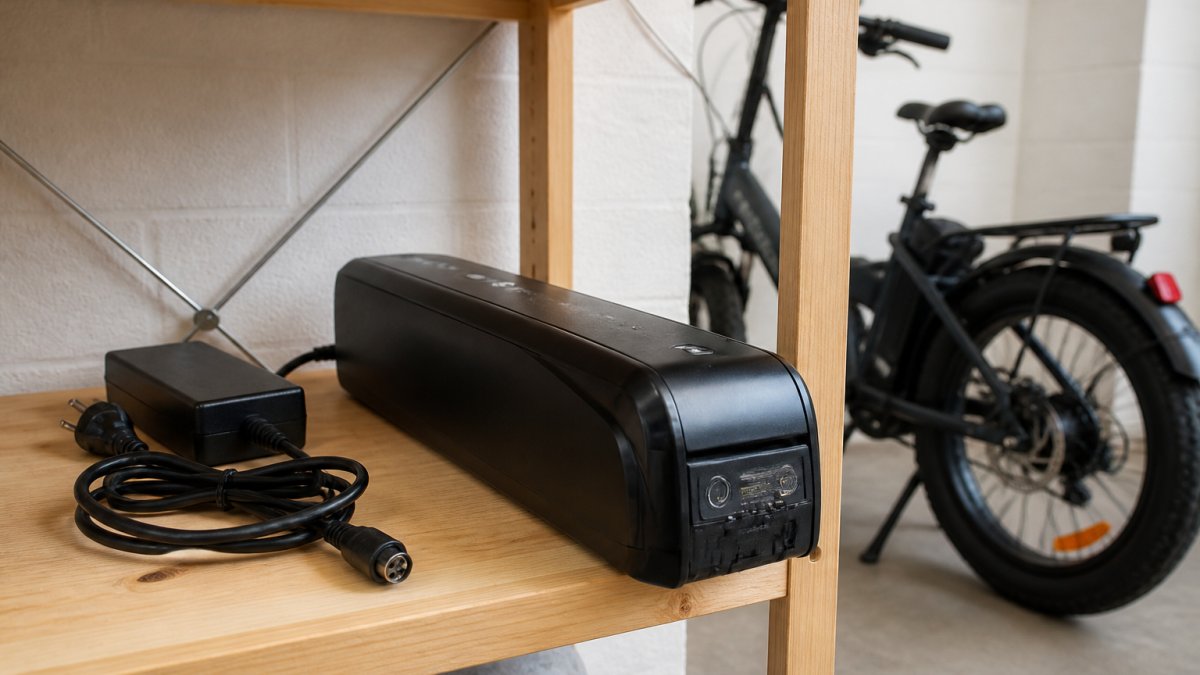
Where you keep the bike matters too. Extreme temperatures, both hot and cold, shorten battery lifespan. Cold weather temporarily reduces range, and heat exposure causes permanent damage. For long-term storage, aim for a dry, shaded, indoor space and check the charge level every couple of months. Maintaining clean contact points is just as vital for longevity as temperature control, and preventing battery corrosion remains the most effective way to ensure consistent power delivery across all your electrical equipment.
3. Match Your Pedal-Assist Mode to the Ride
Higher assistance levels drain the pack faster. That is obvious. What many riders miss is that the top assist mode also works the battery harder per kilometre, which adds up over a season.
Use the lowest assist level that still feels comfortable. On flat ground, that is often level one. Save the highest setting for steep hills and headwinds. The G-Hybrid Jason, for example, offers five speed electric ride modes, so you can drop down a level on the flat and click back up when the road tilts.

4. Ride Smoothly and Let Momentum Work for You
Smooth acceleration uses less energy than hard starts. Every time you surge away from a stop, the motor pulls a big spike of current. Do that fifty times on a commute and you have spent a noticeable chunk of your range.
Ride like you are trying to keep a cup of coffee from spilling. Ease away from lights, keep a steady pace, and let momentum carry you. Braking late and hard, then accelerating again, is the most wasteful pattern there is.
5. How to Increase E-Bike Range Without Buying a Bigger Battery
You can add real range per charge without spending a penny on a new pack. Tyre pressure, gear selection and load are the three levers most riders ignore.
Mint Chain Cleaner 500ml Spray Can →
Under-inflated tyres increase rolling resistance, so the motor works harder for the same speed. Check pressure weekly with a gauge, such as the Oxford Air Pump Gauge Twin Head, and inflate to the range printed on the tyre sidewall. Drag from a soft tyre is one of the easiest losses to fix.

Tyre Pressure, Gears and Cutting Unnecessary Load
Gears are not just for climbing. Shifting down to keep your pedalling cadence comfortable lets you contribute more of the effort, so the motor contributes less. Rider weight and cargo load also matter: every extra kilogram costs energy on hills and gradients.
| What to check | Why it matters | How often |
|---|---|---|
| Tyre pressure | Lower rolling resistance, less motor strain | Weekly |
| Gear selection | Lets you pedal efficiently, cuts motor load | Every ride |
| Cargo and load | Less weight means less energy per hill | Before each trip |
| Route planning | Fewer stops and climbs, steadier pace | Before each trip |
6. Electric Bike Battery Lifespan: What to Measure and When to Act
Electric bike battery lifespan is best judged by how much range you have lost, not by how old the pack is. A well-cared-for lithium-ion battery will typically hold a useful share of its original capacity for several years.
Measure it. Note your range per charge on a familiar route at a known assist level, and repeat the test every few months. If your range per charge drops sharply, or the pack no longer holds a charge, it is time to have it tested. Our UK after-care service includes battery testing, so you are not guessing.
7. Keep the Rest of the Bike in Shape So the Battery Isn't Working Overtime
A poorly maintained bike makes the battery work harder. A stiff, dirty chain, dragging brakes and worn tyres all add resistance, and the motor pays for it.
Keep the drivetrain clean and lubricated. A product like the Mint Chain Cleaner dissolves dried-on grime, and the Oxford Mint All Weather Lube leaves a protective film that reduces dirt ingress. Regular cleaning of your chain extends its life and keeps performance steady. Check electrical connections too, so power flows cleanly.

Frequently Asked Questions
How can I make my e-bike battery last longer?
Charge to around 80% for daily rides and only go to 100% before a long trip. Store the battery between 10°C and 20°C, away from damp garages and direct sun. Avoid letting it run flat, and recharge before it drops below roughly 20%. Use the lower pedal-assist modes on flat ground, keep tyres pumped to the pressure on the sidewall, and shift down before hills rather than relying on motor power alone.
Should I leave my e-bike battery plugged in all the time?
No. Leaving a lithium-ion battery on the charger for days at a time keeps it at full voltage, which speeds up degradation. Unplug once the charger indicator shows the charge is complete. If you only ride short distances, charging to about 80% is kinder to the battery than topping it to 100% every night.
How should I store an electric bike battery when it is not in use?
Remove the battery if your bike allows it, and store it indoors at roughly 50% to 60% charge. A cool, dry cupboard beats a shed or garage, where damp and winter cold accelerate capacity loss. Check the charge every two to three months and top it back to around half if it has dropped. Never store a battery fully flat or fully charged for months.
Does using a higher assistance level drain an e-bike battery faster?
Yes. Higher pedal-assist modes draw more current, so the same journey uses more battery capacity. On a 36V 10.4Ah battery, dropping from the top assist level to a mid setting on flat roads can noticeably stretch your range per charge. Save the highest mode for steep gradients or headwinds, and drop back down once the road levels out.
How often should I charge my e-bike battery?
Charge after most rides rather than waiting for the battery to empty. Lithium-ion cells age fastest at very low and very high charge levels, so keeping the battery between roughly 20% and 80% most of the time is the simplest habit for a long electric bike battery lifespan. A full charge before a long commute is fine; just don't leave it sitting at 100% for days afterwards.
The challenge with any e-bike is that good habits are easy to talk about and harder to keep. A pack that is charged well, stored properly and supported by a well-serviced bike simply lasts longer. At Green Hybrid Bikes, we back every purchase with UK after-care that includes battery testing, servicing and local warranty support, plus a free test ride at our Leicester showroom so you can feel the range for yourself. Get started with Green Hybrid Bikes and ride further, for longer.