

Electric Bike vs Mountain Bike for Commuting
Table of Contents
- Electric Bike vs Mountain Bike: Key Differences for Commuting
- Weight, Portability and Urban Infrastructure
- Tires, Rolling Resistance and Traction on City Streets
- Best Commuter Electric Bikes: Motor Power and Range
- E-Bike Battery Range for Commuting: Real-World Expectations
- Electric Mountain Bike Maintenance vs Standard Mountain Bikes
- Cost, Theft Risk and Long-Term Ownership
- Which Should You Choose for Your Commute?
- Frequently Asked Questions
Last Updated: September 27, 2026
Electric Bike vs Mountain Bike: Key Differences for Commuting
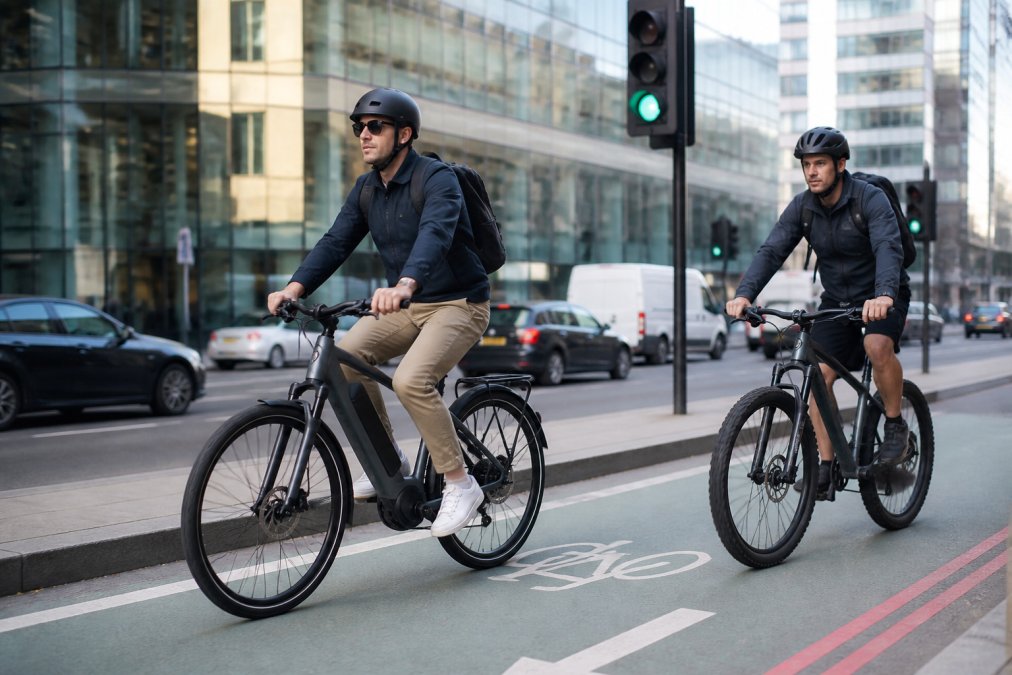
When considering an electric bike versus a mountain bike for commuting, you're weighing two fundamentally different philosophies. An electric bike prioritises efficiency and speed on urban infrastructure, while a mountain bike prioritises durability and traction across varied terrain. For most daily commuters navigating city streets, an electric bike delivers faster journey times, lower maintenance costs, and genuine range. But if your commute involves unpaved paths, steep hills, or rough surfaces, a mountain bike's suspension and aggressive tread might be worth the trade-offs.
Weight, Portability and Urban Infrastructure
An electric bike typically weighs 22-24 kg; a mountain bike weighs 16 kg. That 6-8 kg difference matters when carrying the bike up stairs, storing it in a flat, or loading it onto public transport. Urban infrastructure favours lighter bikes; bike lanes and smooth pavements don't demand mountain bike frame geometry. An e-bike's lighter weight and lower rolling resistance mean less effort to accelerate through traffic.
Intermodal Commuting: The Hidden Weight Penalty
For intermodal commuting, weight is critical. Carrying a 22-24 kg e-bike up station stairs and onto crowded trains is demanding; a 16 kg mountain bike is noticeably easier. Many bus operators limit bike spaces and prohibit e-bikes due to battery safety regulations, while standard mountain bikes face no restrictions. The weight difference compounds across repeated daily lifts.
Folding e-bikes (18-20 kg) offer a middle ground but sacrifice comfort and range. For structured intermodal commutes, a lightweight mountain bike (14-16 kg) remains most practical. If your commute is entirely on-bike with no public transport, the e-bike's motor assistance and speed outweigh the weight penalty.
Tires, Rolling Resistance and Traction on City Streets
Mountain bike knobby tyres excel on dirt and gravel but create rolling resistance on asphalt. E-bikes use hybrid or slick tyres optimised for urban surfaces, adding 5-7 miles of usable range on a 30-mile city commute. Mountain bike tyres grip wet asphalt better, but modern commuter e-bikes use puncture-resistant hybrid tyres that balance grip and efficiency adequately. For 95% paved commutes, knobby tyres work against you.
Best Commuter Electric Bikes: Motor Power and Range
UK e-bikes are limited to 250W motor power and 15.5 mph assisted speed (Riding an electric bike: the rules). Mid-drive motors (at the pedals) provide better hill-climbing torque; hub motors (in the wheel) require less maintenance. Both deliver sufficient power for urban commuting, though mid-drive motors suit hilly routes better.
The Green Hybrid Bikes Commuter E-Bike Elegent features a 250W motor and 36V 10Ah battery, delivering up to 30 miles of range. The 6-speed Shimano gears and pedal assist mode extend range further on flat sections. For longer commutes, the Mountain E-bike 27.5 inch Alloy G-Hybrid Windwheel offers a 36V 13Ah battery with up to 40 miles of range.

E-Bike Battery Range for Commuting: Real-World Expectations
A 30-mile claimed range typically delivers 22-26 miles in practice, covering a 12-15 mile round trip comfortably. Charging takes 4-5 hours, making overnight home charging practical. The Commuter E-Bike Elegent's removable battery allows workplace charging. Mountain bikes require no battery management, an advantage for unpredictable commutes or areas without charging infrastructure.
Electric Mountain Bike Maintenance vs Standard Mountain Bikes
A standard mountain bike requires routine maintenance: chain lubrication, brake bleeding, suspension servicing, and drivetrain adjustment. These are standard cycling tasks, though mountain bikes demand more frequent attention than commuter hybrids due to aggressive use.
An electric mountain bike adds motor and battery maintenance to the list. The motor itself is largely sealed and low-maintenance, but the battery requires proper storage (cool, dry conditions) and periodic health checks. Lithium batteries degrade over time, typically retaining 80-85% capacity after 2-3 years of regular use.
At Green Hybrid Bikes, our UK after-care service includes battery testing, motor inspection, and full servicing. This support is valuable because e-bike repairs require specialist knowledge that general bike shops may lack. A standard mountain bike can be serviced by any competent mechanic, but e-bike battery and motor issues often require the manufacturer's expertise.
The Mountain E-bike 27.5 inch Alloy G-Hybrid Windwheel comes with 12 months' warranty on battery and motor, covering manufacturing defects.

Cost, Theft Risk and Long-Term Ownership
A standard mountain bike from Green Hybrid Bikes starts at £229-279. A quality electric bike starts at £849. The upfront cost difference is substantial, but the comparison is incomplete without considering running costs and theft risk.
Mountain E-bike 27.5 inch Alloy →
An e-bike's battery degrades over time and eventually requires replacement. A standard bike's drivetrain wears and requires periodic replacement (chain, cassette, chainring), but these are cheaper individual components.
Theft Risk and Insurance Premiums: The Hidden Cost of E-Bikes
Theft is a genuine concern with e-bikes, and the financial impact extends beyond the initial loss. The motor and battery make e-bikes attractive targets for thieves, and a stolen e-bike represents a loss of £800+. Mountain bikes are less desirable to thieves, though quality models still attract attention.
Standard contents insurance often doesn't cover e-bikes, or covers them only at significantly higher premiums.
The theft risk is not theoretical. E-bikes are stolen at higher rates than standard bikes in urban areas.
Secure lock-up (U-lock through frame and wheel) is essential for both, but e-bike owners should consider additional security: a secondary cable lock through the battery, parking in well-lit areas, or using a bike shed rather than street-side parking. These precautions add time and inconvenience to your commute. A standard mountain bike requires only a single U-lock and can be parked with less concern.
For commuters in high-theft areas (city centres, areas with reported bike crime), the insurance cost and security burden of an e-bike may outweigh the speed and range advantages. A £229 mountain bike, locked securely, represents a lower financial risk and lower ongoing insurance cost.
Intermodal Commuting and Theft Risk
Intermodal commuting (combining cycling with train or bus travel) introduces additional theft risk for e-bikes. If you're leaving your bike locked outside a train station for 8 hours during a working day, the theft risk is substantial. E-bikes are more likely to be targeted by organised bike thieves who specifically seek high-value components (motors, batteries) for resale or parts.
Which Should You Choose for Your Commute?
| Factor | Electric Bike | Mountain Bike |
|---|---|---|
| Paved urban commute | Best choice | Acceptable |
| Unpaved/rough terrain | Acceptable | Best choice |
| Hills (over 5%) | Best choice | Requires more effort |
| Journey time under 30 mins | Both suitable | Both suitable |
| Storage space limited | Mountain bike wins | Mountain bike wins |
| Intermodal (train/bus) | Mountain bike wins | Mountain bike wins |
| Long-term cost | Similar after 5 years | Lower upfront |
| Maintenance expertise needed | Specialist required | General mechanic OK |
| Theft risk | Higher | Lower |
Choose an electric bike if: When evaluating electric bike vs mountain bike for commuting, select an electric bike if your commute is primarily paved, covers 10-20 miles daily, includes hills, and you have secure storage and charging at home or work. The Commuter E-Bike Elegent is purpose-built for this scenario, offering 30 miles of range and pedal assist.
Frequently Asked Questions
Can I use a mountain bike for daily commuting?
Yes, but it has drawbacks. Mountain bikes work for commuting, but their knobby tires create high rolling resistance on paved roads, making pedalling harder and slower. The suspension absorbs energy meant for forward motion, and the upright geometry causes fatigue on longer rides. An electric bike or commuter-specific model will be faster, more efficient, and more comfortable for regular urban journeys.
What is the typical e-bike battery range for commuting?
Most commuter electric bikes offer 25-40 miles per charge. The G-Hybrid Commuter E-Bike Elegant provides up to 30 miles, while the G-Hybrid Windwheel mountain e-bike reaches 40 miles. Real range depends on terrain, rider weight, assist level, and weather. For a typical daily round trip under 20 miles, a single charge covers most commutes with reserve capacity. Always check the watt-hour (Wh) rating: higher capacity means longer range.
Are electric bikes legal for commuting in the UK?
Yes. UK e-bikes must comply with EAPC (Electrically Assisted Pedal Cycle) regulations: maximum 250W motor and 15.5 mph assisted speed. No licence or registration is required for riders aged 14 and over. The motor must cut off when you stop pedalling or reach the speed limit. Riding an illegally modified e-bike (derestricted or over 250W) on public roads voids your warranty and can result in prosecution.
What maintenance costs more: an electric bike or a mountain bike?
Electric bikes cost significantly more to maintain. Beyond standard servicing (chain, gears, brakes), e-bikes require battery care, motor checks, and specialist repairs. Mountain bikes have simpler drivetrains and lower parts costs. However, e-bikes reduce wear on drivetrain components because the motor assists pedalling, extending gear and chain life.
Which is faster for commuting: an electric bike or a mountain bike?
An electric bike is faster. E-bikes with pedal assist or throttle reach 15.5 mph assisted speed with minimal effort, covering distance quickly. Mountain bikes rely entirely on leg power and are slowed by high rolling resistance from knobby tires. On flat urban routes, an e-bike can reduce commute time compared to a standard mountain bike, especially valuable for longer journeys or hilly terrain.