

Alternatives to Driving for City Commuting
Table of Contents
- Why Consider Alternatives to Driving for City Commuting
- Commuter Electric Bikes: The Flexible Middle Ground
- Electric Bike Commuting: Daily Practicality
- Cycling to Work Without Electric Assistance
- Public Transport Commuting: Reliability and Coverage
- Other Sustainable Transportation Options
- Distance- and City-Type Decision Guide
- Comparison Table: Transportation Options at a Glance
- Frequently Asked Questions
Last Updated: October 18, 2026
Why Consider Alternatives to Driving for City Commuting
Driving to work costs money. Petrol, insurance, maintenance and parking fees add up quickly. For many urban commuters, the real question isn't whether alternatives to driving exist, but whether they work in practice.
They do. At Green Hybrid Bikes, we've spent years helping city commuters find the right solution, from electric bikes and public transport to walking, carpooling and micromobility like e-scooters. Each has trade-offs; none suits everyone.
The key is matching the right mode to your commute: distance, city layout, budget and what you're willing to carry. This guide covers each viable alternative to driving and helps you choose a combination that works.
Commuter Electric Bikes: The Flexible Middle Ground
Electric bikes sit between cycling and driving: faster than walking, cheaper than cars, more flexible than buses. For many city commuters, they're the most practical alternative to driving.
The motor kicks in as you pedal, reducing effort on hills and headwinds. You still get exercise, just not the sweaty kind. Battery range is typically 30 to 100 km per charge, depending on model and motor use.
The real advantage is door-to-door speed: no waiting for buses, no fighting traffic, no parking search, and you arrive fresher, often beating driving in congested cities.
Range, Speed and Real-World Performance
E-bike range claims often disappoint in practice. The 100 km spec-sheet figure assumes flat terrain, a light rider and pedal assist only. Real commuting is messier.
Most e-bikes deliver 30 to 50 km of usable range in typical conditions. A 30 km range covers round trips under 25 km; longer commutes need 50+ km and a larger, pricier battery.
UK-legal e-bikes cap at 15.5 mph (25 km/h) under EAPC regulations; exceed it and the bike is illegal for road use (EAPC standards and legal requirements).
The Heybike EC 1 Commuter E-Bike offers 100 km range with a 360 Wh Samsung battery.

Cost of Ownership vs Driving
An e-bike costs £600-£1,100 upfront; a car costs £15,000-£25,000.
Running costs favour the e-bike too: charging costs roughly £0.05-£0.10 per journey versus £1-£2 in petrol, and maintenance runs £50-£100 a year versus £500+ for a car.
Over five years, an e-bike costs roughly £1,000-£1,500 total. A car costs £5,000-£8,000 in fuel and maintenance alone, before insurance and parking. The maths are clear: alternatives to driving save money.
The catch: e-bikes don't replace cars for everything. Bad weather, long trips and cargo push people back to four wheels. But for a 10 km commute three times a week, an e-bike pays for itself in fuel savings within 18 months.
Electric Bike Commuting: Daily Practicality
Electric bike commuting works best when you've solved the practical problems: where to store the bike, how to stay safe in traffic, what happens when it rains.
Storage and Accessibility for Urban Living
A folding e-bike solves the storage problem.
With garden or garage space, a standard e-bike works fine. The Heybike EC1-ST Step Through (£999) has a low-step frame that makes mounting easy, especially for older riders or anyone with mobility concerns.

Step-through frames aren't just for older riders. Anyone wearing a skirt, carrying a heavy bag or recovering from injury benefits from the lower step height and easier mounting.
The Emmelle Step Through Commuter E-Bike (£599) offers an affordable entry point with a step-through design and wheels suitable for varied terrain. It's our clearance model, which means the price reflects real savings.
Weather, Safety and Route Planning
Rain happens. An e-bike doesn't care, it works wet. You do. Wet brakes take longer to stop. Wet roads reduce grip. Wet visibility increases risk.
The solution is adjusting how you ride: slower speeds, longer braking distances, extra caution at corners.
Route planning beats brute-force commuting. A slightly longer route on quiet streets is safer and less stressful than a shorter one through heavy traffic.
Helmet use is non-negotiable. It's not about legal requirements, it's about not cracking your skull (Cycling Safety). Wear one every time, regardless of distance or how safe the route feels.
Cycling to Work Without Electric Assistance
Not everyone wants an e-bike. Human-powered cycling is cheaper, lighter and needs no charging.
Standard cycling works best for shorter commutes: under 8 km each way, flat terrain and reasonable fitness.
The advantage: a basic bike costs £200-£400. Maintenance is simple. No battery to replace. No motor to repair. Just pedals, gears, and brakes.
The disadvantage: you're doing all the work. A hilly 5 km commute will be felt; a 10 km one leaves you tired. That limits who can cycle daily.
Many commuters use cycling part-time: nice weather only, or for specific days. On wet days or when running late, they switch to public transport or e-bikes.
Public Transport Commuting: Reliability and Coverage
Buses, trams and trains form the backbone of urban transport in most cities: mostly reliable, frequent, and requiring no effort beyond waiting and boarding.
The trade-off: you're at the mercy of schedules. A 10-minute bus delay costs you 10 minutes; a cancelled train costs you your commute.
Folding e-bike G-Hybrid City Bike Indigo →
Public transport shines for longer commutes (over 15 km) and fixed schedules. If you work 9-to-5 and your bus runs every 10 minutes, it's reliable.
Cost varies by city and distance. Many UK employers offer tax-free travel benefits, which reduce the effective cost. Check whether your employer offers this, it can save £50-£100 per month.
Combining Modes for a Complete Journey
The real power emerges when you combine modes: bus for the long stretch then cycle the last 2 km, or cycle to the station, train for the main journey, walk the final stretch.
This removes the weakness of any single mode. Bus late? Cycle instead. Bike flat? The bus is your backup. No single failure derails your day.
Many commuters discover their best commute uses three different modes. That's not a failure of any single mode, it's the strength of having options.
Other Sustainable Transportation Options
Several other alternatives to driving deserve mention, though each suits specific situations.
Walking for Short Trips
Walking is free, healthy, and requires no equipment beyond shoes. For trips under 2 km, walking often beats other modes when you factor in waiting time for buses or time spent unlocking bikes.
The catch: weather and time. A 2 km walk takes 25-30 minutes. This works for some commutes; it doesn't work for others. Rain, snow, and extreme heat make walking unpleasant.
Walking works best as part of a combined journey: walk to the bus stop, take the bus, walk the final stretch. This gives you the health benefit without the time penalty.
Micromobility: Electric Scooters and Mopeds
E-scooters offer speed and portability. They're lighter than e-bikes (typically 10-15 kg) and fold for easy carrying. They're also less stable, less comfortable, and less suitable for longer distances.
E-scooters work best for journeys under 5 km on flat, smooth terrain. They're ideal for covering the "last mile" from a train station to your office. As a primary commute tool, they're limited.
Mopeds (50cc) sit between e-bikes and motorcycles. They're faster and require less physical effort, but they cost more (£1,500-£3,000), require a licence, and need fuel or charging. They're viable for commutes over 20 km where e-bikes feel too slow.
Carpooling and Ride-Sharing
Carpooling reduces the environmental cost of driving. You split fuel and parking costs with colleagues. It's cheaper than driving alone and more flexible than public transport.
The catch: coordination. You need colleagues with similar schedules and routes. You lose autonomy, if someone's late, you're all late. If you need to leave early, you're stuck.
Ride-sharing services (Uber, local equivalents) offer flexibility but cost more than public transport for daily commuting. They work better as occasional backup than as a primary mode.
Distance- and City-Type Decision Guide
Under 5 km: Walking, cycling, or e-bikes work well. If flat, a standard bike suffices.
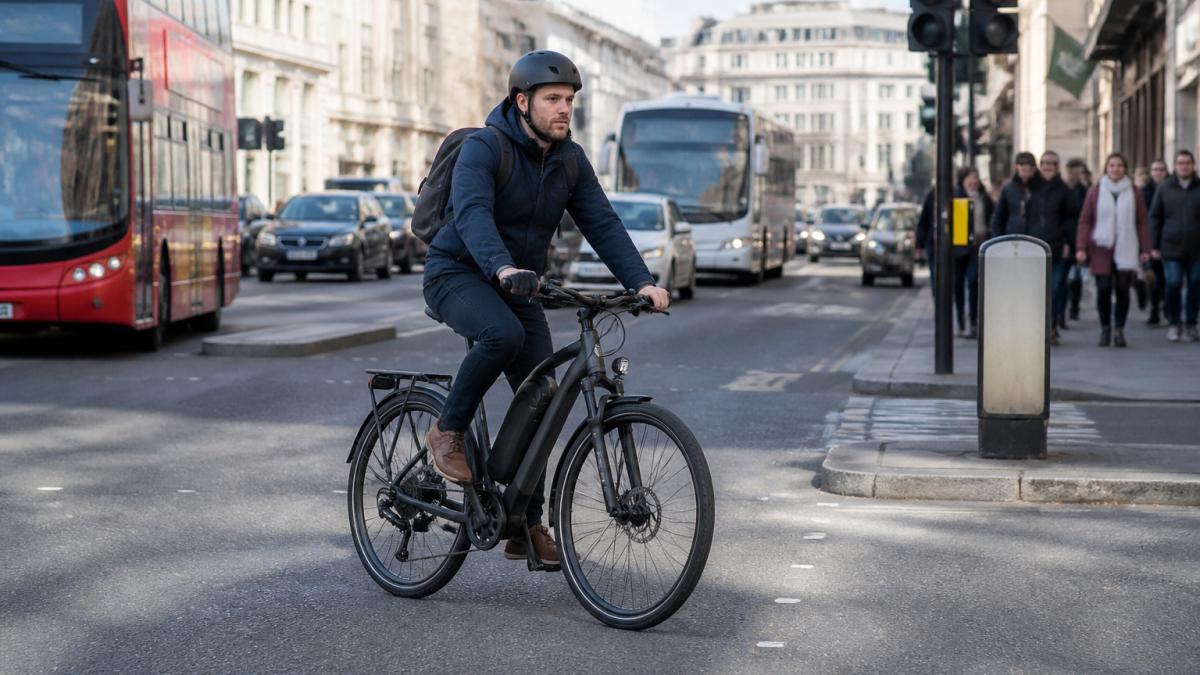
5-10 km: E-bikes dominate this range.
10-20 km: E-bikes still work but start to feel like a stretch on bad-weather days.
Over 20 km: Public transport or carpooling usually wins. E-bikes are possible but require serious commitment.
Flat cities (think Cambridge, Norwich): Standard cycling and e-bikes both work well. Walking covers short distances easily.
Hilly cities (think Sheffield, Bristol): E-bikes become essential for any distance over 3 km.
Poor public transport (smaller towns, rural areas): E-bikes and carpooling become more attractive.
Comparison Table: Transportation Options at a Glance
| Mode | Distance | Cost per Journey | Weather Friendly | Fitness Required | Speed (km/h) |
|---|---|---|---|---|---|
| Walking | Under 2 km | Free | No | Low | 5 |
| Standard Cycling | 2-8 km | £0 | No | Medium-High | 15-20 |
| Electric Bike | 5-20 km | £0.05-£0.10 | Yes | Low | 25 |
| Public Transport | 5-30+ km | £1.50-£3 | Yes | None | 20-40 |
| E-Scooter | 2-5 km | £0.10-£0.20 | No | Low | 25 |
| Carpooling | 10-30+ km | £0.50-£1.50 | Yes | None | 30-50 |
Choosing alternatives to driving isn't about picking one perfect mode. It's about building a commute that works on good days and bad days, when you're on time and when you're running late. Most successful commuters use two or three modes in combination.
If you're considering an e-bike as part of your solution, Green Hybrid Bikes offers a range designed specifically for commuting. For flat storage, the Freedom Folding E-Bike (£799) folds to suitcase size without sacrificing performance.

All our e-bikes comply with UK EAPC regulations and come with our UK after-care service, repairs, servicing, and local warranty support. Visit our Leicester showroom for a free test ride, or shop online for UK-wide delivery.
Frequently Asked Questions
Can an electric bike really replace a car for commuting?
For many urban commuters, yes. An electric bike offers door-to-door convenience, faster travel than public transport on short routes, and significantly lower costs. A commuter e-bike can cover 30-62 miles on a single charge, enough for most daily journeys. However, weather, cargo needs, and commute distance all matter. For journeys over 15 miles or frequent bad weather, combining an e-bike with public transport often works best.
What are the most practical alternatives to driving to work?
The best alternatives depend on your commute distance and city infrastructure. Cycling and e-bikes work well for distances under 5 miles. Public transport (buses, trains) suits longer journeys and provides reliable schedules. Carpooling reduces costs if you share routes with colleagues. Walking covers short trips. Many commuters combine modes: cycling to a bus station, for example. E-bikes offer the most flexibility because they handle hills, longer distances, and varying weather better than regular bicycles.
How do I choose the best alternative to driving for my commute?
Start with distance: under 3 miles favours walking or cycling; 3-10 miles suits e-bikes or public transport; over 10 miles typically needs public transport or carpooling. Consider weather exposure, hills, storage space at home and work, and whether you need to carry cargo. Test options before committing. E-bikes offer a good middle ground because they handle distance, hills, and storage better than regular bikes, while remaining faster and cheaper than cars or taxis.
What is the cheapest way to commute in a city?
Walking is free but limited by distance. Public transport costs £50-150 per month depending on your area. An e-bike costs £600-1,100 upfront but costs only a few pounds per month to run, making it cheaper over time than public transport or driving. A regular bicycle is cheaper upfront but slower and harder on hills. Carpooling shares fuel costs but depends on finding reliable sharers. For most urban commutes, an e-bike offers the best long-term value.
Are folding e-bikes practical for commuting in a flat?
Yes, folding e-bikes are ideal for small spaces. They fold to roughly 80cm x 60cm, fitting in most hallway corners or under stairs. The G-Hybrid Folding E-Bike City (£649) and Freedom Folding model (£799) both fold easily and weigh around 21kg, so you can carry them upstairs if needed. Folding bikes also make it easier to take your bike on public transport or store it at work, giving you flexibility if weather changes mid-commute.
