

Benefits of Mid Drive Motors for Hills: E-Bike Guide
Table of Contents
- How Mid Drive Motors Work on Inclines
- Torque vs Wattage: What Actually Gets You Up a Hill
- Gear Ratios and Mechanical Advantage on Steep Gradients
- Weight Distribution, Traction and Center of Gravity
- Motor Heat, Efficiency and Battery Range on Climbs
- Best Electric Bikes for Hilly Commutes
- E-Bike Motor Power Regulations UK: What You Can Legally Ride
- Frequently Asked Questions
Last Updated: September 23, 2026
How Mid Drive Motors Work on Inclines
A mid drive motor is an electric bike motor mounted at the bottom bracket, driving the cranks rather than the wheel. This design choice fundamentally changes climbing performance because the motor's power is integrated with the bike's gearing.

At Green Hybrid Bikes, we explain it to customers this way: a hub motor pushes the wheel directly, while a crank-driven system multiplies its effort through the drivetrain. On a steep gradient, that multiplication is the difference between spinning out and sailing up.
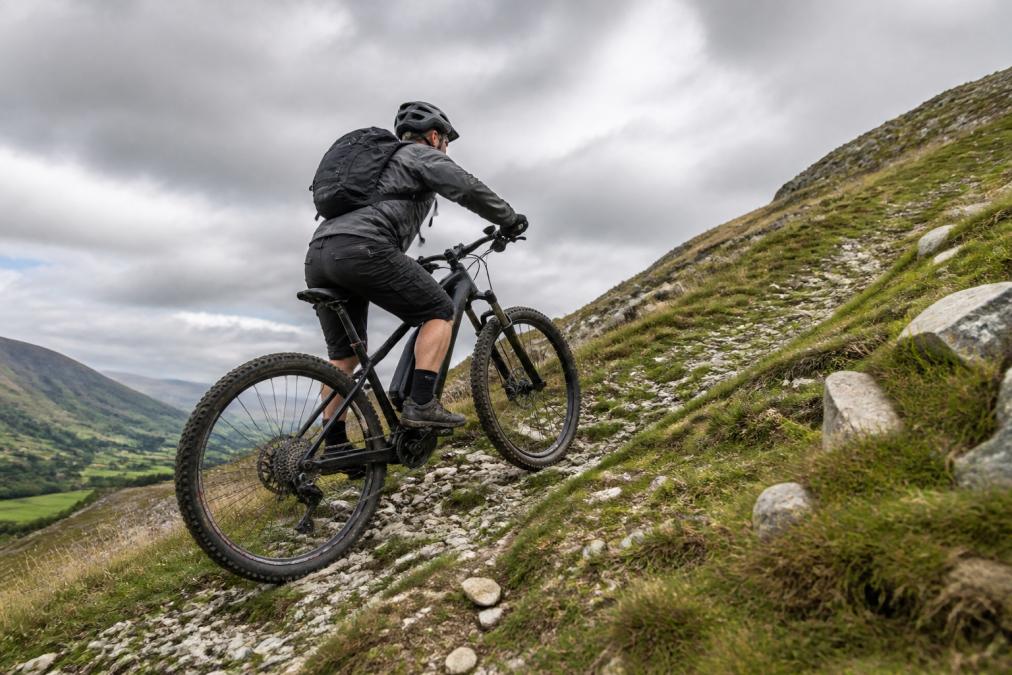
Crank-Driven Power Delivery Explained
Crank-driven power delivery means the motor adds force at the point where you pedal, not at the wheel. The chain then carries combined human and motor torque through the cassette and derailleur.
The practical result: select a lower gear and the motor's output is multiplied by the same ratio your legs enjoy. Rotational speed at the motor stays comfortable while the rear wheel turns slowly and forcefully. That is mechanical advantage working in your favour, and it is why mid drive motors feel so natural on climbs.
Torque vs Wattage: What Actually Gets You Up a Hill
Torque gets you up a hill; wattage keeps you there. Torque is rotational force, measured in newton metres (Nm), and it dictates whether you can turn the pedals on a steep gradient at all.
Wattage describes how quickly work is done, which matters more for sustained speed once you are moving. A motor rated at 250W with strong torque will out-climb a higher-wattage hub unit on a sharp incline, because torque at the crank is multiplied by the gearing.
Many riders fixate on wattage figures and ignore torque entirely. That is backwards for hilly terrain.
Gear Ratios and Mechanical Advantage on Steep Gradients
Gear ratios are where a mid drive motor's climbing advantage becomes measurable rather than marketing. Because the motor drives the cranks, its torque passes through the same chainring, chain, cassette and derailleur as your legs, so every gear you select multiplies motor torque by the same factor it multiplies yours.
The Mechanical Advantage, in Numbers
Mechanical advantage is the ratio between the chainring and the rear sprocket. A typical hill-climbing setup pairs a 32-tooth chainring with a 42-tooth largest sprocket. Divide the rear sprocket by the chainring and you get a ratio of roughly 1.31:1, meaning every newton metre the motor produces at the crank arrives at the rear wheel multiplied by about 1.31, minus small drivetrain losses.
Swap to a 46-tooth cassette sprocket and the same 32-tooth chainring gives you roughly 1.44:1. That is a meaningful jump in climbing force from the same motor, achieved purely by changing a cassette. This is the lever principle in action: a small chainring driving a large sprocket trades rotational speed for turning force, exactly as a long lever trades distance for lifting power.
Why Hub Motors Cannot Access This
A hub motor's output is fixed relative to wheel speed. It has no chainring, no cassette and no derailleur in its power path; the motor turns the wheel directly. On a steep gradient the wheel slows, the motor slows with it, and torque falls away from its efficient operating band. The rider can shift gears, but shifting only changes how hard they pedal; it does nothing for the motor.
A mid drive motor, by contrast, keeps spinning at a comfortable rotational speed in a low gear while the rear wheel turns slowly and forcefully. The motor stays in its efficient band and the gearing does the heavy lifting.
What This Means When You Choose a Bike
Look at the lowest gear the bike offers, not just the motor's torque figure. A 250W mid drive motor paired with a wide-range cassette, say 11-42 teeth or broader, will out-climb the same motor paired with a narrow 11-28 cassette, because the low gear multiplies torque further. When a manufacturer lists gearing, treat the largest rear sprocket as a climbing specification in its own right.
E-Bike Mid Drive G-Hybrid Jason Mid →
Weight Distribution, Traction and Center of Gravity
Where a motor sits changes how a bike behaves on a climb, not just how much power it delivers. A mid drive motor sits at the bottom bracket, low and between the wheels. A hub motor sits in one wheel, usually the rear, adding mass at the extremity of the frame. Centralising this weight improves handling on steep inclines, which becomes even more critical when you are finding bike-friendly routes that navigate challenging terrain.
Why Central Mass Improves Grip
Traction depends on how much of the bike's weight presses each tyre into the surface. A mid drive keeps mass low and central, so weight is shared more evenly between front and rear. On a loose, wet or gravelly climb, that balance keeps the rear tyre loaded enough to grip without the front going light and washing out.
A rear hub motor concentrates weight over the rear wheel. On paper that sounds good for traction, but in practice it makes the front end skittish when you stand to pedal or hit a rut, and the rear tyre can dig in and spin rather than roll. The imbalance shows most on steep, loose surfaces where you need both tyres working.
The Centre of Gravity Effect on Handling
A low centre of gravity makes a bike feel planted. With the motor at the cranks, the heaviest single component sits near the ground and near the bike's midpoint. Lean into a climb and the bike tracks predictably rather than pivoting around a heavy rear wheel.
This matters on descents too.
Tyres, Pressure and Surface
Weight distribution only converts to traction if the tyre can use it. A wider, softer tyre on a balanced frame finds grip where a hard, narrow tyre spins. On mixed terrain, dropping tyre pressure slightly increases the contact patch and lets the tyre conform to the surface, but only if the bike's weight is spread enough to press both tyres down.
What to Check Before You Buy
Ask where the battery sits as well as the motor. Many mid drive bikes mount the battery on the downtube, which reinforces the low, central mass advantage. A bike that pairs a mid drive motor with a downtube battery and balanced geometry will out-handle and out-grip a hub-driven equivalent on the same gradient, not because it has more power, but because it puts the power down more effectively.
Motor Heat, Efficiency and Battery Range on Climbs
Sustained climbs generate heat, and heat is the enemy of motor efficiency. A mid drive motor runs near its optimal rotational speed in a low gear, so it produces less waste heat than a hub motor straining at low speed.
Best Electric Bikes for Hilly Commutes
The best electric bikes for hilly commutes pair a mid drive motor with wide gearing and a battery that holds its range under load. That combination handles steep gradients without draining the battery or overheating the motor.
| Feature | Why It Matters on Hills |
|---|---|
| 250W mid drive motor | High torque, smooth power delivery through the gears |
| 36V 11.4Ah battery | 60-80 km range, 4-5 hour charge time |
| Shimano 8-speed gears | Low ratios for steep gradients, mechanical advantage |
| Hydraulic disc brakes | Reliable stopping on long descents |
| 27.5" Kenda tyres | Traction and balance on varied terrain |
E-Bike Motor Power Regulations UK: What You Can Legally Ride
E-bike motor power regulations in the UK cap motor output at 250W and assist at 15.5 mph for a bike to count as an electrically assisted pedal cycle, which means no licence, registration or insurance is required (Riding an electric bike: the rules).
Frequently Asked Questions
Why are mid drive motors more efficient on steep hills?
Mid drive motors sit at the cranks and use the bike's gears, so the motor spins at its efficient cadence while the gearing multiplies torque at the rear wheel. That mechanical advantage means less current draw for the same climb, so the battery lasts longer. Hub motors run at a fixed ratio to wheel speed, which forces them to work harder and draw more power on steep gradients.
Do mid drive e-bikes handle inclines better than hub motors?
For steep or long climbs, yes. Because the motor drives through the drivetrain, gear shifting lets you trade speed for torque, which is exactly what a hill demands. A 250W mid drive motor paired with a wide-range cassette can out-climb a hub motor of higher nominal wattage on gradients above roughly 10%, and it keeps the weight central rather than in the rear wheel.
What is the difference in torque between mid drive and hub motors?
Mid drive motors typically deliver 40-90Nm at the crank, and the drivetrain multiplies that figure further at the wheel. Hub motors quote torque at the axle, but without gearing they cannot increase it on demand. That is why a mid drive motor often feels stronger on a steep gradient even when the quoted wattage is similar.
How does a mid drive motor affect e-bike weight distribution?
Placing the motor at the bottom bracket keeps mass low and central, between the wheels. That lowers the centre of gravity, which improves balance on technical climbs and reduces front-wheel lift on steep gradients. Rear hub motors add unsprung weight at the back, which can make the front end feel light when the gradient steepens.