

Best Electric Bike Accessories for Winter Riding
Table of Contents
- Why Winter Riding Demands Specialised Electric Bike Accessories
- Visibility and Safety Lighting for Dark Winter Commutes
- Weather Protection: Mudguards and Fenders
- E-bike Battery Care in Winter Conditions
- Winter E-bike Tyre Pressure and Traction Management
- Drivetrain Maintenance: Chain Cleaning and Lubrication
- Quick Accessory Comparison and Selection Guide
- Budget vs Premium Winter Setup Options
- Frequently Asked Questions
Last Updated: October 4, 2026
Why Winter Riding Demands Specialised Electric Bike Accessories
Winter attacks every component of your e-bike: battery performance drops, chains corrode, visibility plummets, and grip disappears, which is why investing in the best electric bike accessories for winter riding is essential. Without the right accessories, you risk your safety and your bike's longevity.
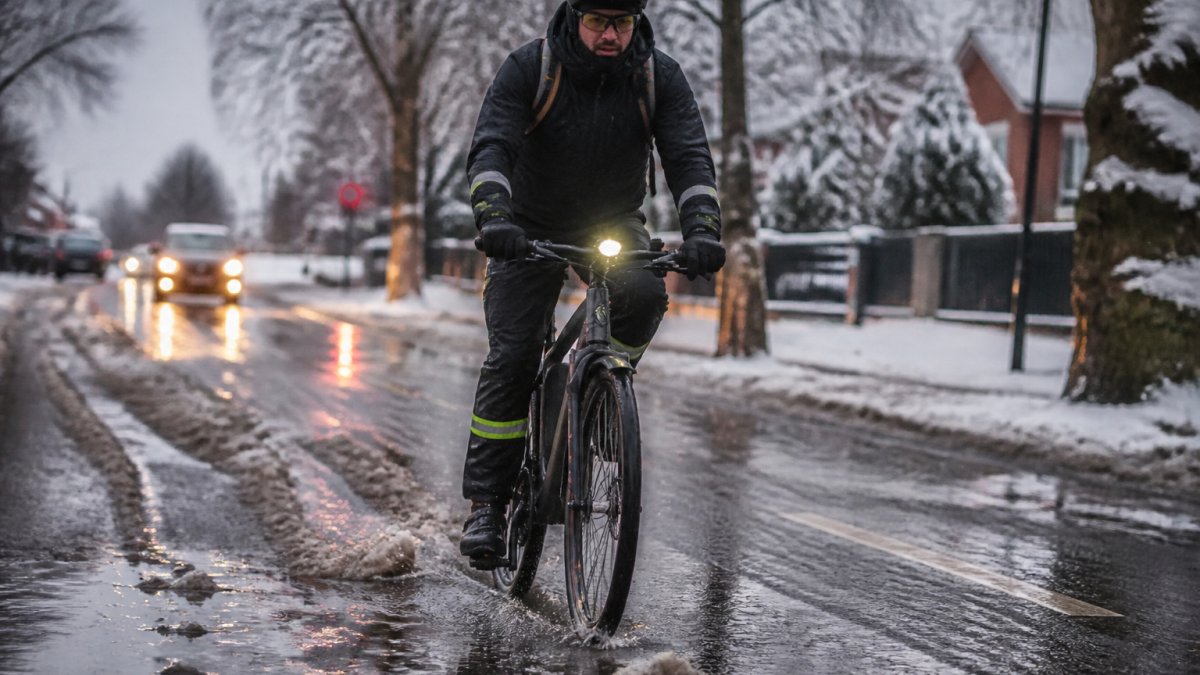
The best electric bike accessories for winter riding protect your battery from thermal degradation, shield your drivetrain from corrosion, keep you visible in darkness, and maintain traction on ice and wet roads.
A solid winter setup doesn't require replacing your entire bike. Strategic accessories address four critical failure points: visibility, weather protection, traction, and drivetrain maintenance.
Visibility and Safety Lighting for Dark Winter Commutes
Winter daylight disappears by 4 p.m. in most of the UK. Visibility lights aren't optional, they're survival gear.
Multi-Mode Front and Rear Light Sets
The Oxford Ultra Torch Cube Light Set delivers 5 brightness modes, IPX4 waterproofing, and 270-degree visibility with chip-on-board (COB) technology that spreads light wider than traditional LEDs. Runtime spans 3.5 to 8.5 hours depending on mode. USB rechargeable with tool-free fitting. At £27.99, it's a straightforward investment for winter commuting.

Compact Lights for Space-Constrained Commuters
For space-constrained bikes, the Oxford UltraTorch Mini+ delivers 15 lumens with IP65 waterproofing and 1.5 to 23-hour runtime. At £32.99, the universal seat-post bracket works on almost any geometry and offers easy on-and-off mounting.
Weather Protection: Mudguards and Fenders
Road salt and slush corrode electrical connectors and battery terminals. The Fat Tyre/Beach Bike Mudguards/Fender fits wheels 26-inches and larger with tool-free installation. At £19.99, they reduce splash and extend drivetrain life.
E-bike Battery Care in Winter Conditions
Cold temperatures reduce battery capacity by 20-30% in sub-zero conditions, but this is temporary. The real risk is permanent degradation from repeated cold-charge cycles.
Understanding Cold Temperature Battery Behaviour
Lithium-ion batteries operate optimally between 15°C and 35°C. Charging below 0°C causes lithium plating, a permanent fault. Never charge a cold battery outdoors or in an unheated garage; repeated cold-charge cycles compound into measurable range loss by spring.
Thermal Management Protocol for Winter Commuting
Storage: Keep your battery indoors at room temperature (15-25°C). If indoor storage isn't possible, use a neoprene thermal cover (10-15 mm thickness) to maintain battery temperature 8-12°C above ambient.
Pre-ride warm-up: Allow your battery to sit at room temperature for 30 minutes if stored cold. Ride conservatively for the first 10-15 minutes to let the battery warm naturally.
Charging timing: Never charge a cold battery. Wait until it reaches at least 5°C, or bring it indoors and wait 1-2 hours before charging.
Charging location: Charge indoors in a dry space between 10-25°C. Avoid charging in damp sheds, unheated garages, or outdoors. Moisture combined with cold increases corrosion risk at battery terminals, and temperature fluctuations stress the cells.
Monitoring Battery Health Through Winter
Track your range weekly. On a mild day, fully charge and ride at medium assist until depleted to establish a baseline. If range drops, have your battery tested professionally.
Winter-Specific Charging Practices
Charge when the battery reaches 20-30% remaining, and unplug at 80-90% charge. This reduces stress on cells and extends lifespan. Avoid trickle charging; disconnect immediately after the battery is full.
Range Planning in Winter
Reduce expected winter range by 25-30%. If your e-bike normally delivers 50 km per charge, assume 35-37 km in winter. Monitor battery voltage during rides; if it drops unusually fast in the first 5 minutes, the battery is cold, ease off assistance and let it warm naturally. Maintaining core body temperature is just as critical as managing your power cells for successful warm winter commuting, as physical comfort directly influences your ability to handle the bike safely in freezing conditions.
Winter E-bike Tyre Pressure and Traction Management
Check tyre pressure weekly; cold temperatures reduce it by roughly 1 psi per 5°C drop. Run 10-15% lower pressure than summer settings to improve traction. Check tread depth monthly; replace tyres if grooves are shallow. Worn rubber offers almost no grip on ice.
Drivetrain Maintenance: Chain Cleaning and Lubrication
Road salt attacks electrical connectors, brake components, battery terminals, and exposed metal. Winter riding demands aggressive post-ride cleaning and comprehensive decontamination.
The Salt Corrosion Problem on E-Bikes
E-bikes suffer catastrophically from salt corrosion because electrical connectors at the motor, battery, and display can corrode, causing intermittent faults or complete failure. Salt also accelerates brake pad and rotor wear, reducing braking power.
Immediate Post-Ride Cleaning Protocol
After every winter ride in slushy conditions, rinse the entire bike with fresh water within 2 hours. Use a hose, not a pressure washer. Pay special attention to battery terminals, motor connector, display connectors, brake rotors, and chain. Wash away salt and grit before they dry and bond to metal.
Oxford Mint All Weather Lube 500ml →
Step 2: Dry exposed electrical components with a soft cloth or low-pressure compressed air. Step 3: Inspect connectors for salt residue (white or grey crusty deposits). If present, use a cotton swab dampened with distilled water to gently wipe the connector. Do not use abrasive materials or solvents.
Chain Cleaning and Drivetrain Maintenance
Clean and lubricate your chain every 100-150 km in winter. Use the Mint Chain Cleaner 500ml Spray Can (£7.49) to dissolve contaminated lube and grit. Apply the Oxford Mint All Weather Lube 500ml (£7.99) with corrosion inhibitors and PTFE, or the Oxford Mint 365 Lube 75ml (£4.99) for casual commuting.


Brake Maintenance in Winter
Brakes corrode and wear faster in winter. Inspect your brake pads monthly:
- Pad thickness: Most pads have a wear indicator line. If the pad is level with that line, replace them. Worn pads reduce braking power and increase rotor damage.
- Rotor surface: Spin the wheel and look at the rotor edge-on. If it's visibly rough or discoloured (grey or brown instead of shiny silver), it's corroded. Light corrosion can be cleaned with fine sandpaper (400-600 grit) and a rag. Heavy corrosion requires rotor replacement.
- Calliper alignment: If brakes are rubbing or pulling to one side, the calliper may have shifted due to impact or corrosion. This is a job for a professional mechanic; misaligned hydraulic brakes can fail suddenly.
Electrical Connector Protection
Beyond cleaning, protect connectors from future salt exposure. Some riders apply a thin coat of dielectric grease (a non-conductive lubricant) around battery and motor connectors. This creates a water-repellent barrier without interfering with electrical contact. Use sparingly, a thin layer around the connector base, not inside the connector itself.
For long-term storage (end of winter or off-season), disconnect the battery and store it separately in a dry place. This prevents corrosion at the connection point and extends battery lifespan.
Cassette and Sprocket Cleaning
The cassette (rear sprockets) corrodes as fast as the chain. When cleaning your chain, also scrub the cassette with an old toothbrush and chain cleaner. Use a rag to dry it thoroughly. If the cassette develops a rough, pitted surface (visible under close inspection), it's corroded and should be replaced. A corroded cassette will damage a new chain quickly, so don't skimp on this step.
Winter Maintenance Schedule
- After every wet/slushy ride: Rinse bike, dry electrical components, inspect connectors
- Every 100-150 km: Clean and lubricate chain
- Monthly: Inspect brake pads, rotor condition, cassette wear; check battery terminals for corrosion
- End of winter: Deep clean entire drivetrain, replace worn pads/rotors, professional electrical inspection if available
This schedule sounds intensive, but it's the difference between a bike that lasts 5+ winters and one that fails mid-season.
Quick Accessory Comparison and Selection Guide
Choosing the right winter accessories depends on your commute distance, weather exposure, and storage space. Here's a practical framework:
| Accessory | Best For | Starting Price | Key Benefit |
|---|---|---|---|
| Oxford Ultra Torch Cube Light Set | Standard commutes in darkness | £27.99 | 5 modes, 270° visibility, 3.5-8.5hr runtime |
| Oxford UltraTorch Mini+ | Space-constrained or multi-bike setups | £32.99 | Compact, IP65 waterproof, 1.5-23hr runtime |
| Fat Tyre Mudguards | All commuter e-bikes | £19.99 | Reduces salt spray by 70%, adjustable height |
| Oxford Mint Chain Cleaner 500ml | Regular winter maintenance | £7.49 | Dissolves contaminated lube and grit |
| Oxford Mint All Weather Lube 500ml | Heavy winter commuting | £7.99 | Corrosion inhibitors, PTFE protection |
| Oxford Mint 365 Lube 75ml | Casual winter riding | £4.99 | Biodegradable, year-round use |
Budget vs Premium Winter Setup Options
A complete winter setup doesn't have to be expensive. Here's what matters at different budget levels:
Budget Setup (under £60):
- Mudguards (£19.99)
- Chain cleaner (£7.49)
- Chain lube (£4.99)
- Front and rear lights from existing stock or budget alternatives
This covers the essentials: visibility, weather protection, and drivetrain maintenance. You're protected against the most common failure points without premium pricing.
Mid-Range Setup (£60-£120):
- Mudguards (£19.99)
- Oxford Ultra Torch Cube Light Set (£27.99)
- Chain cleaner (£7.49)
- All Weather Lube (£7.99)
- Oxford Deluxe Oblong Mirror with Rain Shield (£12.99)
The mirror addition matters in winter, rain and slush coat your vision, and the rain shield keeps water off the reflective surface. This setup handles serious winter commuting without breaking the bank.
Premium Setup (£120+):
- Everything in the mid-range setup
- Oxford UltraTorch Mini+ as a backup light (£32.99)
- Thermal insulation accessories (handlebar mitts, thermal sleeves if your e-bike lacks them)
- Professional battery thermal management advice
The premium approach adds redundancy and expert support. A backup light means you're never stranded if your primary light fails. Thermal management consultation prevents costly battery damage.
Winter e-bike riding demands planning, but the right accessories transform it from a miserable slog into a manageable commute. Visibility, weather protection, traction, and drivetrain care are non-negotiable.
Frequently Asked Questions
What are the most essential electric bike accessories for winter riding?
Visibility lights, mudguards, and proper chain maintenance products form the foundation. Winter-specific e-bike accessories include front and rear lights (such as the Oxford Ultra Torch Cube Light Set at £27.99), mudguards to shield from slush and salt spray, and corrosion-inhibiting chain lubricants. Battery thermal management and tyre pressure checks are equally critical but often overlooked by new riders. Start with lighting and weather protection, then add drivetrain maintenance supplies.
How do I protect my e-bike battery during winter?
Cold temperatures can reduce battery range because chemical reactions slow in low temperatures. Keep your battery indoors when not riding, store it above 5°C, and avoid charging immediately after a cold ride. Insulated battery covers help, but the most effective approach is bringing the battery inside. Check battery health regularly using your e-bike's diagnostic system, and avoid letting the battery fully discharge in sub-zero conditions. Most modern e-bikes include cold-weather performance warnings in their display settings.
Do I need special tyres for winter e-bike riding?
Studded or winter-specific tyres significantly improve grip on ice and packed snow, but standard tyres work adequately on wet tarmac and light slush. The key is maintaining correct tyre pressure: reduce pressure by 5-10% in winter to increase contact patch and traction. Check pressure weekly during winter months, as cold temperatures cause natural pressure drops. If you ride on ice regularly, invest in studded tyres; for urban commuting on treated roads, proper pressure management is often sufficient.
How often should I clean and lubricate my e-bike chain in winter?
Winter conditions demand weekly chain maintenance rather than monthly. Road salt, grit, and moisture accelerate corrosion and wear. Use a chain cleaner like Mint Chain Cleaner 500ml (£7.49) to remove salt and dried lubricant, then apply corrosion-inhibiting lube such as Oxford Mint All Weather Lube 500ml (£7.99). This formulation includes PTFE and anti-corrosion additives specifically designed for extended winter journeys and harsh conditions.
What visibility accessories do I need for winter commuting?
Winter daylight hours are short, so front and rear lights are essential even during daytime in some regions. The Oxford Ultra Torch Cube Light Set (£27.99) offers 5 modes including day flash, 270-degree visibility, and 3.5-8.5 hour runtime. For commuters with limited space, the Oxford UltraTorch Mini+ (£32.99) provides compact 100-lumen output with tool-free mounting. Pair lights with reflective gear and a rear mirror (Oxford Deluxe Oblong Mirror at £12.99) to maximise visibility to traffic.