

Electric Bike Test Ride Benefits: Try Before You Buy
Table of Contents
- Why an Electric Bike Test Ride Beats Reading Specs
- How to Test Ride an Electric Bike: Step-by-Step
- E-Bike Sizing Guide: Getting Frame Geometry Right
- What to Check When Buying an E-Bike: Post-Ride Checklist
- Testing Terrain, Weather and Real-World Conditions
- Insurance and Liability During E-Bike Demos
- Conclusion: Book Your Free Test Ride
- Frequently Asked Questions
Last Updated: September 11, 2026
Why an Electric Bike Test Ride Beats Reading Specs
An electric bike test ride is the only reliable way to confirm whether a motor, battery and frame suit your body, route and riding style. No spec sheet tells you how a bike feels pulling away from traffic or how much assistance you need on a climb.
At Green Hybrid Bikes, buyers arrive convinced by a spec sheet, then change their mind within ten minutes of riding. Motor output, range claims and gear counts say nothing about how the bike carries its weight, how quickly the motor responds, or whether the saddle leaves you sore.
The test ride benefits go well beyond comfort. A demo reveals acceleration, braking performance and handling in conditions that matter to you. It also exposes the gap between advertised battery range and real-world range, which depends on rider weight, terrain and how much you rely on the motor. According to GOV.UK guidance on electric bike regulations, pedal-assist cycles must meet specific power and speed limits to be road-legal (gov.uk), so confirming a model complies matters before you commit.
Below: how to test ride an electric bike, what to bring, and the checks that separate a confident purchase from an expensive mistake.
How to Test Ride an Electric Bike: Step-by-Step
A structured test ride takes about 45 minutes across five stages: setup, low-speed control, assistance testing, hill climbing and a post-ride review. Rushing it is the most common first-time buyer mistake.
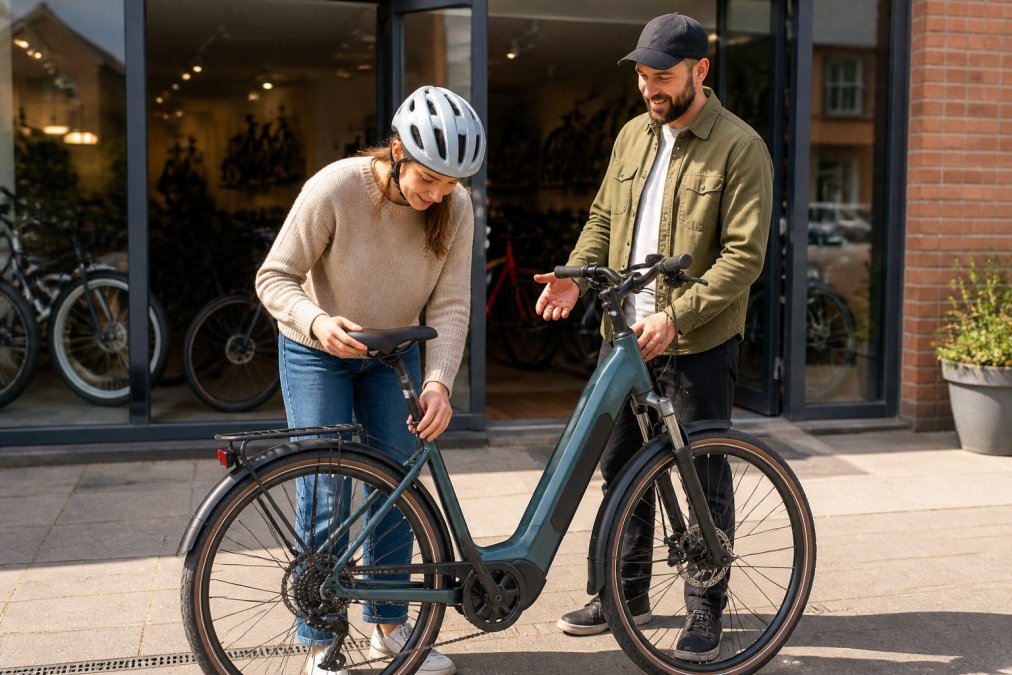
Here is how to test ride an electric bike properly:
- Book ahead and state your route. Tell the shop whether you commute, carry shopping or ride hills, so staff can match you to the right motor type.
- Set the bike up before you move. Adjust saddle height, reach and tyre pressure first.
- Start in the lowest assistance level. Ride slowly for two minutes to feel balance and weight distribution.
- Cycle through every assistance level. Note where the motor engages and how smoothly power arrives.
- Test the brakes deliberately. On an empty stretch, brake firmly from a moderate speed.
- Ride a hill, even a small one. Climbing reveals motor output and gearing.
- Return and review immediately. Note your impressions while fresh.
What to Bring to Your Demo
Bring photo ID, a payment card for any deposit, and your usual cycling shoes. Flat-soled trainers beat thick boots because they let you feel the pedals and shift your foot quickly.
If you commute, bring your usual bag or pannier: a loaded bike handles differently, and the demo confirms the rack suits your daily load. Bring glasses if you wear them, and anything you'd normally carry for a medical condition.
Ride Modes to Try: Pedal Assist and Throttle
Pedal assist and throttle are the two ways an e-bike delivers motor power. Pedal assist adds power as you turn the pedals; a throttle provides power without pedalling, helping you start from a standstill or recover momentum.
Most systems use a torque sensor or a cadence sensor. A torque sensor responds to how hard you push, so the ride feels natural and progressive; a cadence sensor responds to whether you pedal at all, feeling like an on/off switch. Testing both back to back is one of the clearest test ride benefits: you feel the difference within seconds, and it usually decides which bike you buy.
E-Bike Sizing Guide: Getting Frame Geometry Right
Frame geometry determines whether a bike feels stable, twitchy, cramped or stretched, and matters more on an e-bike because the motor and battery add weight. A well-sized frame puts you in control; a poorly sized one makes every junction feel uncertain.
An e-bike sizing guide is only useful if you apply it to a real bike. Use these checks during your demo:
- Standover height: You should clear the frame by at least a few centimetres when standing flat-footed.
- Reach: Your arms should have a slight bend, not be locked straight.
- Saddle position: You should be able to touch the ground with your toes while seated.
- Weight distribution: The bike should feel balanced, not heavy at the front or rear.
Standover Height and Optimal Sizing
Standover height is the clearance between the ground and the top tube, and the fastest way to rule a bike in or out. Step-through frames ease mounting and dismounting, suiting riders returning to cycling, anyone carrying a load, and those who prefer not to swing a leg over a high bar.
Optimal sizing also depends on wheel size and frame design: a 27.5-inch wheel rolls over uneven surfaces more comfortably than a smaller one, while a compact folding frame trades stability for storage convenience. Sit on the bike, plant both feet, and check you feel secure. If you are stretching or on tiptoes, the frame is wrong regardless of the label.

What to Check When Buying an E-Bike: Post-Ride Checklist
A post-ride checklist turns a pleasant demo into a confident purchase. Most buyers remember how a bike felt but forget to verify the details that drive long-term cost and satisfaction, and a plain tick-box list tells you what to look at, not how to choose between two bikes that both pass.
That is why we recommend scoring each demo out of 100. Ride two or three bikes on consecutive days, score each immediately while the sensations are fresh, and compare totals side by side. A bike that wins on feel but loses on running costs is a decision to see in numbers, not guess at in the showroom.
The Post-Ride Scorecard
Score each category out of the weighting shown, adjusting weightings to your priorities, a rider lifting a bike onto a train daily should weight weight and folding higher than someone with a garage and a flat commute.
| Category | What you are judging | Weight |
|---|---|---|
| Comfort and fit | Saddle, reach, standover, wrist and knee angles after 20+ minutes | 20 |
| Motor feel | Sensor type, power delivery smoothness, noise, cut-off behaviour | 20 |
| Hill and load performance | Climbing in your lowest gear, acceleration with your usual bag or pannier | 15 |
| Braking and control | Modulation, wet-weather confidence, stopping distance from a moderate speed | 15 |
| Range realism | Display figure versus your actual route, assistance level used | 10 |
| Practicality | Rack, mudguards, lights, kickstand, lock mounts, battery removal | 10 |
| Ownership cost | Battery price and warranty, service intervals, local parts availability | 10 |
A score below 60 means the bike is wrong for you regardless of the discount.
The Verification List
Before you leave the showroom, confirm these in writing, not verbally:
- Battery capacity in watt-hours and confirmed charge time (a typical commuter battery charges in 4-5 hours)
- Realistic range for your route, at your weight, in the assistance level you actually used
- Motor type identified: mid-drive or hub, and its rated output
- Gear shifting tested under load on a slope, not on the flat
- Braking performance checked in wet or dry conditions
- Lights, mudguards and rack included or priced separately
- Warranty terms and battery degradation policy stated in writing
- Servicing intervals and local repair options confirmed
- Bike weight checked against your storage and lifting needs
- Total price including any accessories you will need on day one
Technical Questions to Ask the Staff
Ask these during the demo, while the bike is in front of you:
Book a Free E-bike Test Ride Today →

- What is the motor's rated output, and is it limited to comply with UK pedal-assist rules?
- Does this model use a torque sensor or a cadence sensor?
- What range can I realistically expect on my commute, given my weight and route?
- How long does a full charge take, and can the battery be removed for charging indoors?
- What does the warranty cover, and for how long?
- How often does the bike need servicing, and what does a service include?
- Can I buy replacement batteries and parts locally?
- What is the cost of a replacement battery today, and how long is it expected to remain available?
- What is the maximum rider and luggage weight the frame is rated for?
Comparing Two Bikes Side by Side
Once you have scores for two or three bikes, put them in one table with categories down the left and bikes across the top. Usually one wins on motor feel and another on practicality and ownership cost. Neither is automatically right, but seeing the trade-off written down stops you buying on the strength of a single enjoyable hill climb.
If you can only test one bike, score it anyway. A 72 tells you it is workable but not ideal, far more useful than a vague memory of it feeling nice.
Testing Terrain, Weather and Real-World Conditions
Terrain variety is where a demo earns its keep: a bike effortless on flat tarmac can struggle on a steep incline, and one confident on gravel may feel sluggish in city traffic.
Ride the surfaces you actually use, canal path, cobbled street, steady climb. Note how it climbs, accelerates from a standstill and feels when you change direction. Braking deserves particular attention in the wet, since stopping distances lengthen and cheaper brakes fade faster.
Weather testing is an angle most guides ignore: damp roads change tyre grip, and cold reduces usable battery range (energy.gov). If you can only test in the dry, ask staff how the model behaves in rain and whether the tyres and brakes suit wet riding.
Insurance and Liability During E-Bike Demos
Insurance and liability during a demo are rarely discussed, yet they matter before you ride: you are about to ride an unfamiliar, heavier-than-usual machine on public roads, and you don't know who pays if something goes wrong. Here is how to close it out in five minutes before you clip in.
What to Confirm Before You Ride
Ask the shop these four questions and get the answers in writing, an email or a printed demo agreement is fine:
- Who insures the bike during the demo? Ask to see confirmation, not just a verbal assurance.
- Does that cover extend to third-party injury or property damage? This is the gap that catches people out. A policy that covers the bike may not cover the car you clip at a junction.
- What is the excess, and who pays it if the bike is damaged? A scratched frame or a buckled wheel can carry a substantial excess. Know the figure before you ride.
- What happens if the bike is stolen while it is in my care? If you are allowed to take the bike away for an extended demo, this matters.
Where Your Own Cover Fits
Check your schedule for two things: whether pedal cycles are covered away from home, and whether the liability section applies while riding someone else's bike.
If you hold specialist cycle insurance, read the demo clause: some policies cover you riding any bike with the owner's permission, others only bikes you own.
What to Do If the Shop Has No Cover
In that situation:
- Ask whether you can ride only on private land or a closed circuit rather than public roads.
- Confirm in writing that you accept liability for damage to the bike up to a stated maximum.
- Check that your own liability cover applies before you ride on the road.
- Consider whether a short-term cycling liability policy is worth arranging for the day.
After You Buy
Once the bike is yours, the cover question changes. Third-party liability is the priority, injury or damage you cause someone else can run into serious money.
Check three things when comparing cover: whether it includes third-party liability, whether it covers the bike away from home, and whether it covers electric bikes specifically. Some standard cycle policies exclude e-bikes or apply a lower value cap to them, so confirm the wording rather than assuming.
Conclusion: Book Your Free Test Ride
Choosing an e-bike from photographs and specifications is guesswork. The test ride benefits are concrete: you confirm sizing, feel the difference between sensor types, test hill climbing on your own route, and check the details that affect running costs for years.
Green Hybrid Bikes offers free e-bike test rides at our Leicester showroom, with folding, fat tyre, mountain and commuter models available to try. Every purchase includes UK after-care, covering repairs, servicing, battery testing and local warranty support. Selected models deliver 50+ miles of range on a single charge, and our team will help you match a bike to your commute, your storage and your budget.

Book a free e-bike test ride with Green Hybrid Bikes and choose your electric bicycle with confidence.
Frequently Asked Questions
Can you test ride an e-bike before purchasing?
Yes. Green Hybrid Bikes in Leicester offers free no-obligation test rides. Booking ahead helps you try the specific model and frame size you are considering. Green Hybrid Bikes stocks folding, commuter, mountain and fat tyre models, so you can compare how each handles your route. Test rides usually last 15 to 30 minutes, enough time to assess pedal assistance, motor output and comfort.
What should I look for during an electric bike test ride?
Focus on frame geometry, standover height and how the bike feels at low speed. Test pedal assistance levels, gear shifting and braking performance on a slope if possible. Check the motor's response: a torque sensor feels more natural than a cadence sensor for hill climbing. Note battery range estimates and charging time. A post-ride evaluation checklist helps you compare models objectively.
How does the weight of an e-bike affect handling during a test ride?
E-bikes weigh more than standard bicycles, often 20 to 30 kg. That weight affects handling, maneuverability and balance, especially at low speeds or when lifting the bike. During a test ride, try turning tightly, stopping suddenly and pushing the bike uphill. A mid-drive motor keeps weight central for better stability; a hub motor shifts weight to the rear wheel. Both are manageable once you adjust.
Are there specific safety checks to perform during an e-bike demo?
Before you ride, check tyre pressure, brakes and that the battery is secure. Wear a helmet and high-visibility clothing. During the ride, test braking performance on a quiet road and practise using the throttle and pedal assistance separately. Ask about insurance and liability cover during demos. In the UK, e-bikes limited to 250W and 15.5 mph are legal to ride on public roads without a licence.