

Top 5 Safety Tips for Beginner E-Bike Commuters
Table of Contents
- 1. Always Wear a Helmet and Appropriate E-Bike Safety Gear
- 2. Maximise Your E-Bike Visibility at Night and in Poor Light
- 3. Follow Traffic Laws and Use Predictable Hand Signals
- 4. Perform a Pre-Ride E-Bike Safety Check Every Commute
- 5. Ride Defensively and Stay Alert in Traffic
- Getting Started: Your First E-Bike Commute
- Frequently Asked Questions
Last Updated: October 17, 2026
1. Always Wear a Helmet and Appropriate E-Bike Safety Gear
A helmet is non-negotiable. Every ride puts your head at risk, and the difference between a minor incident and a life-altering injury often comes down to whether you wore one.
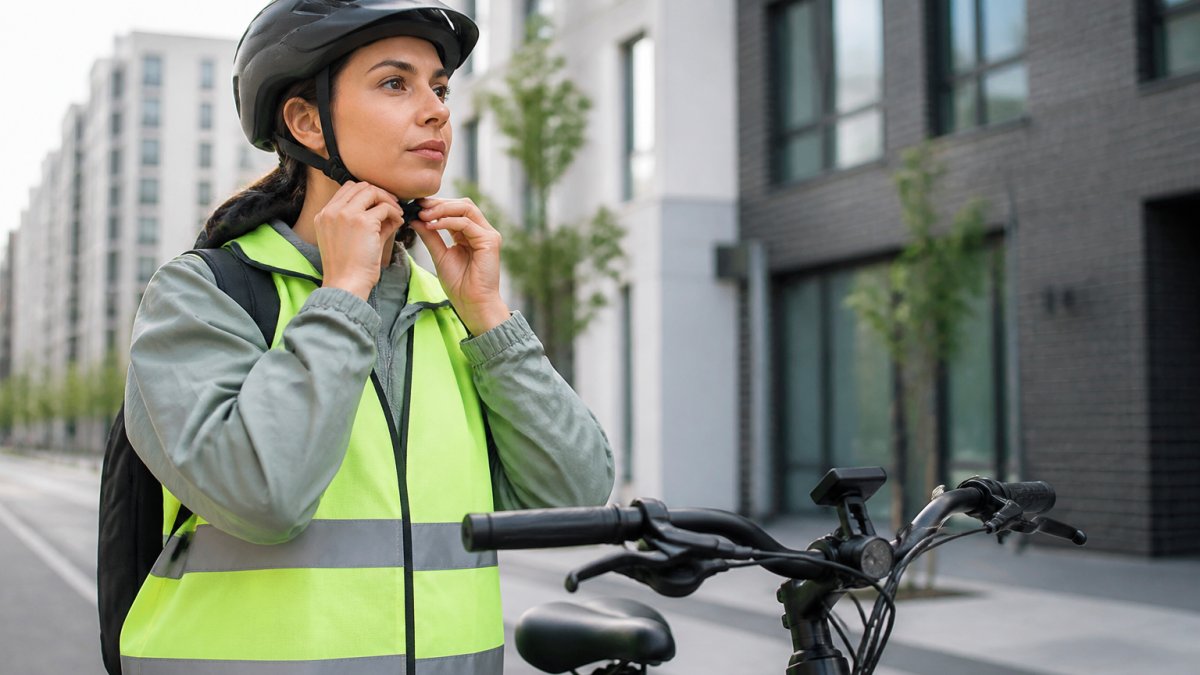
Choosing the right helmet
Your helmet needs to fit properly. Too loose and it slides during a fall; too tight and you'll skip wearing it. Fit matters more than brand.
Look for adjustable sizing. Most helmets come in two size ranges, smaller helmets typically fit 53-57cm head circumference, while larger ones fit 58-61cm. The Bicycle Helmets Adults Oxford F15 offers both sizes and adjustable straps for a secure fit.

If you want additional visibility features built in, the Oxford Metro Glo Road Cycling Helmet (£29.99) provides the same strong, lightweight construction but in size ranges 52-56cm and 57-62cm.

Additional protective clothing and visibility accessories
A helmet protects your head, but drivers need to see you before they can avoid you. Reflective gear and bright clothing are your first line of defence in low light or poor weather.
Wear a reflective vest or high-visibility jacket on your commute, it's the difference between being seen and being invisible. Add reflective strips on your pedals and seat post to catch light from multiple angles.
Visibility changes dramatically between daylight and dusk, what's obvious at noon is nearly invisible at 5pm. Plan your gear around your commute time, not just the weather.
2. Maximise Your E-Bike Visibility at Night and in Poor Light
Lights are mandatory for night riding, not optional extras. They help you see the road and make you visible to others.
Front and rear lights for commuting
Your front light illuminates the path ahead; your rear light warns traffic behind. Both are essential.
The Oxford Ultra Torch Cube Light Set (£27.99) provides both front and rear lights with 5 modes, including flash and pulse settings.

For commuters with tight handlebar space or those who need a compact option, the OXFORD ULTRATORCH MINI+ (£32.99) delivers 100 lumens at the front with three high-power LEDs.
Both lights are waterproof and tool-free to mount, which means you can remove them for charging or storage without fiddling with brackets.
Reflective gear and mirrors
Lights work when they're on. Reflective gear works passively, bouncing car headlights back to the driver even if your lights fail, your backup visibility system.
Reflective strips on your pedals, frame, and clothing are cheap and effective. A bike mirror lets you see traffic approaching from behind without turning your head. The Oxford Deluxe Oblong Fully Adjustable Bike Mirror with Rain Shield (£12.99) mounts easily and includes a rain shield to keep your view clear in wet conditions.
Many beginner commuters skip mirrors as unnecessary. They're wrong: a mirror lets you check traffic without turning your head, keeping your eyes forward and hands on the bars.
3. Follow Traffic Laws and Use Predictable Hand Signals
E-bikes are bicycles, so follow the same traffic laws: stop at red lights, respect one-way streets, and use cycle lanes where they exist. Predictability is safety, drivers anticipate your moves based on what you signal.
Hand signals are your primary communication tool, telling drivers what you're about to do and giving them time to react.
Use these signals consistently:
- Left turn: extend your left arm straight out
- Right turn: extend your right arm straight out, or bend your left arm upward at the elbow
- Stopping: raise your left arm with palm facing backward, or lower your arm downward
Signal at least 2-3 seconds before you turn or stop. Many collisions happen because the driver didn't see the signal, not because the cyclist didn't signal.
At intersections, position yourself clearly, avoid blind spots, and make eye contact with drivers before proceeding. Assume they haven't seen you until you're certain.
4. Perform a Pre-Ride E-Bike Safety Check Every Commute
A pre-ride check takes 90 seconds and catches problems before they become dangerous, skipping it is how small issues become crashes.
Essential checks before you ride
Here are the top 5 safety tips for beginner e-bike commuters to check before every commute:
-
Tyres: Press both tyres with your thumb. They should feel firm, not soft or squishy. Check for visible damage, cuts, or embedded objects. Low pressure makes the bike harder to control and increases the risk of a puncture.
-
Brakes: Squeeze both brake levers. They should feel firm and responsive, not spongy or loose. Spin the wheel and listen for rubbing. Brake pads should have visible material left, if they're worn thin, they won't stop effectively.
-
Chain: Look at the chain for rust, stiffness, or visible damage. A dry chain makes noise and wears faster. If it looks dirty or rusty, it needs cleaning and lubrication.
-
Lights: Turn on your front and rear lights. Check that both illuminate. If one is dim or flickering, charge or replace the battery before riding. Don't assume you'll remember to do this later.
-
Handlebars and seat: Grip the handlebars and twist, they should be locked in place, not rotating. Sit on the saddle and check that it's secure and level. A loose saddle or handlebars affects control.
A basic pump with a gauge is essential. The Oxford Air Pump Gauge Twin Head (£25.00) has dual valve compatibility and a pressure gauge, so you can maintain proper tyre pressure easily. Check your tyre sidewall for the correct range.
Battery and electrical safety
E-bikes add an electrical component standard bikes don't have. A failing battery can leave you stranded far from home.
Bicycle Helmets Adults Oxford F15 →
Check your battery charge before every ride. Most e-bikes show remaining range on the display, plan your route so you never rely on reserve power, and charge before leaving if it's low.
Inspect the battery connector and charging cable for damage. Loose connections or cracks mean the battery isn't safe, stop riding and have it serviced. Water damage is a serious risk, so dry a soaked bike thoroughly before riding again, or have a professional inspect it.
5. Ride Defensively and Stay Alert in Traffic
Defensive riding means assuming drivers don't see you, scanning constantly for hazards, and positioning yourself where you're most visible and safest.
Scanning for hazards and avoiding parked-car doors
The most common collision for cyclists is a suddenly opened car door. Avoid it by riding far enough from parked cars that an open door won't reach you.
Scan parked cars for signs of occupancy, someone inside, brake lights, exhaust, movement, and give occupied cars extra space. Assume the door will open.
Watch for other hazards:
- Potholes and debris in the road
- Pedestrians stepping into your path
- Delivery vans or lorries making sudden moves
- Gravel or loose surface on corners
Constantly scan ahead, not just directly in front of you. The earlier you spot a hazard, the more time you have to react.
Intersections, turning, and lane positioning
Intersections are high-risk zones with traffic moving in multiple directions and often poor visibility. Approach them slowly and deliberately.
Ride in the centre of the lane so drivers see you and you have space to manoeuvre, not in the gutter. Use a cycle lane only if it's safe; never sacrifice safety to follow one.
When turning, signal early and look behind you before moving.
Many collisions happen at junctions because a driver didn't see the cyclist or misjudged speed. Assume you're invisible until proven otherwise.
Wet-weather and seasonal commuting
Wet roads reduce traction and visibility, and rain on windscreens means drivers see you less clearly. Reduce your speed, braking distances increase significantly on wet surfaces.
Wear bright, reflective clothing in the rain. Your normal commute gear might not be visible enough when visibility is poor.
In winter, ice on the road is invisible and deadly. Ride slowly and avoid braking hard. If the road feels slippery, dismount and walk.
Seasonal changes affect your bike too. Salt on roads corrodes metal. After riding in wet or salty conditions, rinse your bike and dry it. Check your chain and brake components for rust.
Getting Started: Your First E-Bike Commute
Your first commute should be a practice run, not your full route. Pick a quiet time of day, a familiar route, and ride at a comfortable pace.
Wear all your safety gear, helmet, reflective clothing, and lights, even if it's daylight. Build the habit from day one.
Bring a basic repair kit: a spare inner tube, tyre levers, and a small pump.
Start your commute 10 minutes earlier than you think you need. Rushing leads to mistakes.
At Green Hybrid Bikes, we offer free e-bike test rides at our Leicester showroom so you can experience an e-bike before committing to a purchase.
The top 5 safety tips for beginner e-bike commuters are preparation, attention, and the right gear to start safely. At Green Hybrid Bikes, we support your commute with high-quality e-bikes, expert advice, and UK after-care servicing to keep your bike safe and reliable. Book a free e-bike test ride today to find the right e-bike for your commute, and get expert guidance on safety and maintenance from our Leicester team.
| Safety Element | Why It Matters | Action |
|---|---|---|
| Helmet & protective gear | Reduces injury severity in a fall | Wear every ride, check fit regularly |
| Front & rear lights | Makes you visible to traffic | Test before each commute, charge weekly |
| Reflective accessories | Passive visibility in low light | Wear reflective vest, add reflective strips |
| Pre-ride checks | Catches problems before crashes | Tyres, brakes, chain, lights, battery, 90 seconds |
| Defensive riding | Avoids collisions with traffic | Scan constantly, assume drivers don't see you |
| Traffic law compliance | Predictability keeps you safe | Stop at lights, signal clearly, use cycle lanes |
UK government guidance on cycle safety
Road Safety GB resources for cyclists
British Cycling's commuting safety advice
Frequently Asked Questions
What are the most important safety tips for beginner e-bike commuters?
The five essential safety tips are: wear a helmet and protective gear, use lights and reflective equipment for visibility, follow traffic laws and hand signals, perform a pre-ride safety check on your e-bike, and ride defensively while staying alert. These practices address the main risks beginner riders face: head injuries, being unseen by traffic, legal violations, mechanical failures, and collisions. Starting with these five fundamentals builds a strong foundation for safe commuting.
What should I check during an e-bike pre-ride safety check?
Inspect your tyres for correct pressure and damage, check your brakes respond smoothly, ensure lights and reflectors are clean and working, verify the battery is charged and secure, test your bell or horn, and confirm the seat and handlebars are properly adjusted. Use a floor pump like the Oxford Air Pump Gauge Twin Head (£25.00) to maintain correct tyre pressure. A quick two-minute check before every commute prevents mechanical failures mid-journey and ensures your e-bike is roadworthy.
How can I stay visible and safe when riding an e-bike in traffic?
Equip your e-bike with front and rear lights such as the Oxford Ultra Torch Cube Light Set (£27.99), which offers 270-degree visibility and multiple brightness modes. Wear reflective clothing and add a bike mirror like the Oxford Deluxe Oblong mirror (£12.99) to monitor traffic behind you. Position yourself in the centre of your lane at intersections, use hand signals before turning, and avoid blind spots near parked cars and large vehicles. Visibility and predictable riding make you harder to miss.
What helmet should I choose for e-bike commuting?
Choose a helmet that fits snugly without gaps, sits level on your head, and has adjustable straps. The Oxford F15 Helmet (£19.99) is lightweight, adjustable, and made in the UK in two sizes (53-57cm and 58-61cm), making it suitable for most adult commuters. The Oxford Metro Glo Road Cycling Helmet (£29.99) offers the same safety in two larger sizes (52-56cm and 57-62cm). Always wear your helmet on every ride, regardless of distance or familiarity with your route.
