

How to Commute by E-Bike in Rain: A Safety Guide
Table of Contents
- Can You Safely Commute by E-Bike in Rain?
- Understanding Water Resistance: IP Ratings and What They Mean
- How to Protect an E-Bike Battery from Rain
- What to Wear Cycling in the Rain
- Riding Techniques for Wet Roads and Rain Conditions
- Cleaning an E-Bike After Riding in the Rain
- Leaving an E-Bike Outside in the Rain
- Your Rainy-Day Commute Checklist
- Frequently Asked Questions
Last Updated: October 13, 2026
Can You Safely Commute by E-Bike in Rain?
Yes, you can commute by e-bike in rain safely, and learning how to commute by e-bike in rain is easier than you might think.
E-bikes aren't fragile machines that break the moment water touches them. Manufacturers design electrical components to withstand normal rain and spray.
The real question isn't whether you can ride in rain, it's whether you're doing it correctly.
Here's what matters: your bike's IP rating, your riding technique, and post-ride maintenance.
Understanding Water Resistance: IP Ratings and What They Mean
An IP rating tells you how well your e-bike resists water and dust. The rating uses two numbers. The first number rates dust protection. The second rates water protection.
For e-bikes, focus on the second number. Here's what it means:
- IPX4: Protected against water spray from any direction. Safe for light rain.
- IPX5: Protected against water jets. Safe for moderate rain and wet conditions.
- IPX7: Protected against temporary immersion (up to 1 metre for 30 minutes). Safe for heavy rain.
Most commuter e-bikes carry an IPX4 or IPX5 rating. This covers normal UK rain and wet commuting. If your bike is IPX7 or higher, you have extra protection.
Checking Your E-Bike's IP Rating
Find your bike's IP rating in the manufacturer's manual or specification sheet. Look for "water resistance" or "IP rating" sections. If you can't find it, contact the manufacturer directly.
Don't guess. A bike without a stated rating might not be rated at all. That's important to know before heavy rain hits.
If you're unsure about your bike, ask before you ride.
Electrical Components Most at Risk
Your battery, motor, and display are the most vulnerable parts. Water can damage electrical connections and corrode contacts.
The battery sits low on the frame, often near road spray. The motor hub sits in the wheel, exposed to wet road conditions.
Connectors are the real weak point. Water seeps into loose or damaged connectors faster than anywhere else. Check connectors regularly.
How to Protect an E-Bike Battery from Rain
Your battery is expensive. Protect it properly.
Most e-bike batteries mount on the frame or rear rack. They're exposed to road spray and rain. Water doesn't need to fully submerge your battery to cause damage, moisture in the wrong place can short circuits.
Here's what to do:
- Check the battery housing. Look for cracks or loose seals. A damaged housing lets water in.
- Keep the battery connector dry. This is where water causes the most damage. Wipe it dry after rides in wet conditions.
- Remove the battery if storing outdoors. Never leave your battery mounted on an e-bike left outside in heavy rain for hours. Take it inside.
If water gets inside your battery, you'll notice reduced range or the battery won't charge. Stop using it immediately and have it tested. A water-damaged battery can't be repaired, it needs replacement.
What to Wear Cycling in the Rain
Your gear matters as much as your bike.
Waterproof clothing keeps you dry and visible. Wet clothes chill you fast, even in mild weather. You lose focus when you're cold.
Wear these items:
- Waterproof jacket. Look for breathable fabric that sheds water without trapping sweat. A cheap plastic rain mac will leave you soaked from inside.
- Water-resistant trousers or leg coverings. Your legs take the worst road spray. Protect them.
- Reflective vest or strips. Rain reduces visibility. Make yourself seen. Reflective gear catches car headlights from further away (Maximise your visibility and your vision on the road).
Avoid cotton. It absorbs water and stays wet. Choose synthetic fabrics or wool blends designed for cycling.
Your shoes matter too. Wet feet are uncomfortable and dangerous, you lose pedal control. Waterproof cycling shoes or water-resistant trainers with good grip help.
Riding Techniques for Wet Roads and Rain Conditions
How you ride in rain determines whether you arrive safely.
Wet roads have less grip than dry roads. Your tyres can't hold the road as well. Braking takes longer. Corners feel slippery. This is where technique saves you.
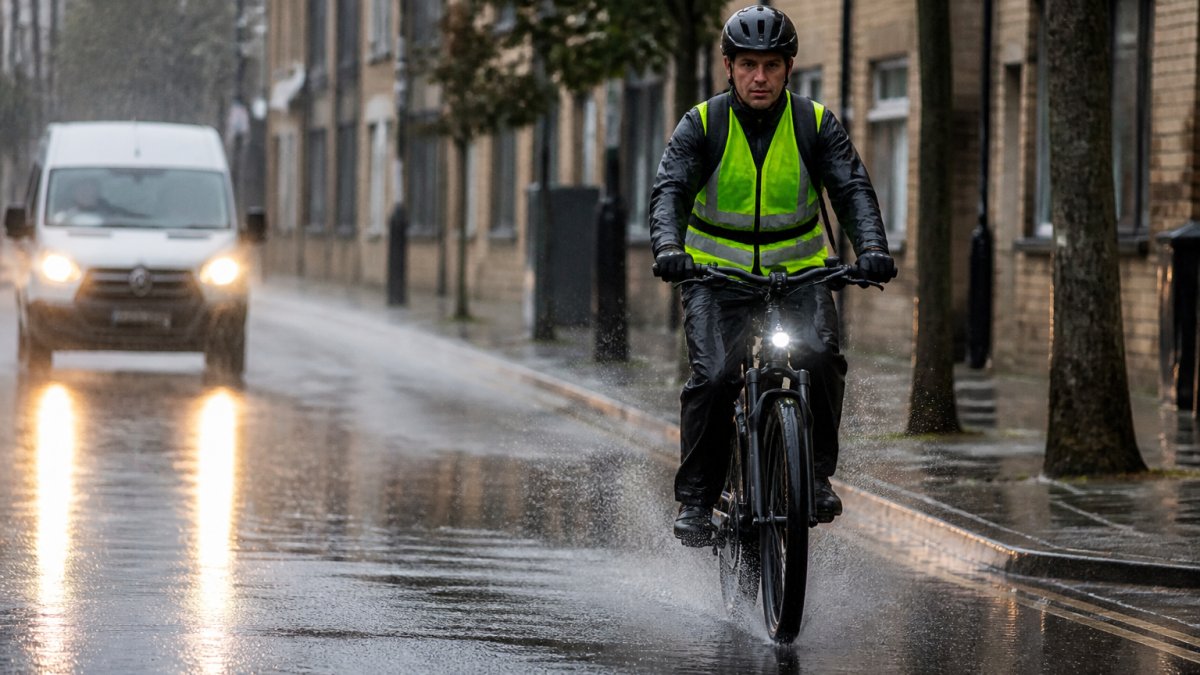
Braking Earlier and Allowing Extra Stopping Distance
This is the most important rule: brake earlier and brake softer than you would on dry roads.
Wet roads reduce traction by up to 50%. Your stopping distance doubles or triples. If you brake hard, your wheels lock and you skid.
Here's what to do:
- Start braking sooner. Begin slowing down well before you need to stop. Give yourself double the distance you'd use on dry roads.
- Brake gently. Apply steady, even pressure. Avoid sudden braking.
- Use both brakes. Front and rear brakes share the load. This prevents wheel lock on either end.
Test your stopping distance on a quiet, wet road first. Get a feel for how your brakes respond. Don't learn this on a busy commute.
Maintaining Traction and Avoiding Sudden Turns
Smooth movements keep your tyres gripping the road.
Sudden steering inputs cause skids. Sudden acceleration spins the wheel. Sudden braking locks the wheel. All of these throw you off balance on wet roads.
Do this instead:
- Turn smoothly. Use gentle steering inputs. Lean into corners rather than jerking the handlebars.
- Accelerate gradually. Don't twist the throttle hard. Build speed slowly.
- Keep your weight centred. Sit upright and stable. Avoid leaning too far forward or back.
The slower you go, the more margin for error you have. A 5 mph speed reduction makes a huge difference in wet conditions.
Avoiding Wet-Road Hazards
Certain road surfaces become treacherous when wet.
FAT TYRE/ BEACH BIKE MUDGUARDS / FENDER →
Painted road markings (zebra crossings, lane lines) are slippery when wet. Metal surfaces like drain covers, manhole covers, and bridge plates are even worse, they're nearly as slick as ice. Puddles hide potholes and debris.
Here's how to avoid them:
- Steer around painted markings. Cross them at a shallow angle if you must, not perpendicularly.
- Avoid metal surfaces. Ride around drain covers and metal grates. Don't ride over them.
- Treat puddles with suspicion. A puddle might be 2 cm deep or 20 cm deep. You won't know until you hit it. Avoid them.
Look ahead. Scan the road 10-15 metres in front of you. This gives you time to react and steer around hazards.
Using Lights and Improving Visibility
Visibility drops dramatically in rain.
Dark clouds, wet roads, and spray all reduce how well drivers see you. You need lights.
Use front and rear lights even during daytime rain. Drivers rely on lights to spot cyclists.

The Oxford Ultra Torch Cube Light Set offers 5 modes and 270-degree visibility with waterproof IPX4 rating, perfect for rainy commutes.
Wear reflective clothing too. A reflective vest or jacket makes you visible from the side.
Cleaning an E-Bike After Riding in the Rain
Rain leaves salt, dirt, and grime on your bike. These corrode metal and damage electrical components.
Clean your bike after every wet ride. This takes 10 minutes and prevents expensive repairs.
Drying and Inspecting Critical Components
Start by drying everything.
Use a soft cloth to wipe down the frame, battery, and display. Pay special attention to connectors and electrical ports.
Inspect these parts:
- Battery connector. Look for white corrosion or loose contacts. Wipe it dry.
- Motor connector. Check the hub motor for water or corrosion.
- Display screen. Wipe the screen and check the connector at the back.
- Brake connectors (if you have e-brakes). Dry these thoroughly.
If you see corrosion (white or green deposits), apply a thin coat of dielectric grease. This prevents moisture from reaching the metal contacts.
Don't use high-pressure water to clean your bike. Pressure forces water into connectors and seals. Use a soft cloth and a bucket of clean water instead.
Chain Lubrication and Rust Prevention
Your chain rusts quickly in wet conditions.
Rain washes away lubricant. Bare metal rusts within hours. A rusty chain wears faster and transfers power poorly.
Dry your chain with a cloth first. Then apply fresh lubricant.

Apply lubricant to the inside of the chain while rotating the pedals. Don't over-lubricate, excess lube attracts dirt.
Wipe away excess lubricant with a clean cloth. This prevents dirt from sticking to the chain.
Leaving an E-Bike Outside in the Rain
Sometimes you can't bring your bike inside.
Leaving your e-bike outside in heavy rain for hours isn't ideal. Water finds its way into connectors and seals. But short periods (under an hour) in light to moderate rain are usually fine if your bike is IPX4 or higher.
If you must leave your bike outside:
- Remove the battery. Take it inside with you. This protects the most expensive component.
- Cover the display. A small waterproof bag over the screen keeps water out of the connector.
- Position the bike. Angle it so water runs off, not into electrical ports.
- Dry it when you return. Don't let water sit on the bike all day.
For longer periods or heavy rain, bring the bike inside. Most commuters keep their e-bikes in a hallway, shed, or garage. This is the safest option.
Your Rainy-Day Commute Checklist
Before you ride in rain, check these items:
- Check weather forecast. Is it light rain, heavy rain, or storms?
- Inspect your e-bike's IP rating. Do you know your bike's water-resistance level?
- Check battery charge. Rain commutes use slightly more power.
- Inspect connectors. Look for corrosion or loose connections.
Rain commuting is safe and practical. Thousands of commuters do it every day. The difference between safe and unsafe rides comes down to preparation and technique.
At Green Hybrid Bikes, we support commuters who ride year-round. Our e-bikes are built for UK weather.
Understanding how to commute by e-bike in rain means rain doesn't stop your commute. The right bike, the right gear, and the right technique make all the difference.
Rainy-day commuting becomes routine when you understand your e-bike's capabilities and ride with caution. Our Leicester showroom team can walk you through water-resistance ratings and help you choose mudguards and lights that match your commute.

Frequently Asked Questions
How do I know if my e-bike is safe to ride in heavy rain?
Check your e-bike's IP (Ingress Protection) rating in the manufacturer manual. Most modern commuter e-bikes carry an IPX4 rating, which means they can handle water spray from any direction but aren't fully waterproof for submersion. If your rating is IPX3 or lower, avoid heavy rain. Even with IPX4 protection, avoid riding through flooded roads or deep puddles. Always consult your specific model's manual for guidance on wet-weather use and any restrictions the manufacturer recommends.
How to protect an e-bike battery from rain during commutes?
Store the battery in a dry location whenever possible. If you must leave your e-bike outside, remove the battery and take it indoors. Keep the battery connector dry by wiping it with a damp cloth before reconnecting. Avoid charging the battery immediately after riding in heavy rain; allow it to dry for at least an hour first. Check the battery housing for cracks or damage before each wet-weather ride. Many commuters remove their batteries at work or home to protect them from prolonged exposure to moisture.
What should I wear when cycling in the rain on an e-bike commute?
Wear a waterproof jacket and trousers designed for cycling to stay dry and maintain visibility. Add reflective gear or high-visibility clothing to ensure drivers see you in reduced light. Waterproof gloves improve grip on wet handlebars, and waterproof shoes or shoe covers prevent water from soaking your feet. A helmet with a visor helps keep rain out of your eyes. Avoid cotton clothing, which absorbs water; choose synthetic or wool base layers instead. Bright colours and reflective strips are essential for safety on wet roads where visibility is poor.
How long can I leave an e-bike outside in the rain?
Avoid leaving your e-bike outside in rain for extended periods. Short exposure (under 30 minutes) to light rain is generally acceptable for IPX4-rated bikes, but heavy rain or prolonged exposure increases the risk of water ingress into electrical components and corrosion of the chain and frame. If you must park outside, position the bike to shed water away from connectors and the display. Always dry the bike thoroughly when you return home. Regularly leaving your e-bike in wet conditions will shorten its lifespan and increase maintenance costs.
