

What Are the Essentials for Commuting by Bike?
Last Updated: October 24, 2026
Quick Summary
The essentials for commuting by bike start with a well-sorted bike: check tyres, brakes and chain before every ride. Then add a helmet, front and rear lights, a D-lock, and a basic puncture kit, before spending on weather and carrying kit. Buy in that order so each purchase removes the most risk per pound.
- Check tyres, brakes, chain, quick-releases and lights in a two-minute pre-ride check.
- The Oxford Ultra Torch Cube Light Set costs £27.99 with 3.5 to 8.5 hours of runtime.
- The Oxford F15 helmet costs £19.99 and comes in two shell sizes covering 53-57cm and 58-61cm.
- The Giant D Lock costs £9.99 and resists cutting far better than cables.
- A starter kit of helmet, light set, D-lock and spare tube costs around £60.
Table of Contents
- Your Bike Commuting Checklist: Start With the Bike Itself
- Bike Commuting Safety Equipment You Should Not Skip
- What to Wear Cycling to Work: Layers That Handle the Weather
- Mudguards, Racks and Carrying Your Gear
- The Bike Repair Kit for Commuting Every Rider Needs
- Locks and Theft Prevention: Protecting Your Commuter Bike
- Building Your Commuter Kit by Budget and Commute Length
- Book a Free E-Bike Test Ride Before You Commit
- Frequently Asked Questions
Your Bike Commuting Checklist: Start With the Bike Itself
Most guides to the essentials for commuting by bike open with gadgets. We start with the machine you already own, because a well-sorted bike removes the need for half the kit people buy. Spend twenty minutes on your bike before buying accessories.
Tyres, Brakes and the Pre-Ride Check
Tyres and brakes decide whether you arrive safely, so check both before every ride. Squeeze each tyre hard; if it gives more than a few millimetres, pump it up.
A common mistake is ignoring a slow puncture. Fix it at home, not at the roadside in the dark.
Our pre-ride check takes about two minutes:
- Tyres firm and free of embedded glass
- Brakes bite evenly, front and rear
- Chain running quiet and lightly oiled
Keep the chain clean and lubricated with a proper bike lubricant; a dry chain wears fast and shifts badly in wet weather.
Bike Commuting Safety Equipment You Should Not Skip
Safety equipment is where we refuse to compromise. UK law requires lights and reflectors after dark, and common sense requires them in daylight too, because drivers notice movement and brightness long before they notice shape. The Highway Code rules for cyclists set out what the law expects, and the short version is that being seen is not optional.
Lights, Reflectors and Being Seen
A front and rear light are the minimum, and a matched set keeps charging simple. The Oxford Ultra Torch Cube Light Set gives both units, five modes, 3.5 to 8.5 hours of runtime, 270-degree visibility, USB charging and a low battery indicator.

Reflectors matter as much as lights. Keep the rear reflector fitted, add reflective strips to pedals and ankles, and choose clothing with reflective panels.
Helmets and Personal Protection
A helmet is the one piece of safety kit we would never talk you out of. The Oxford F15 is light, adjustable and made in the UK, with two shell sizes covering 53-57cm and 58-61cm, and at £19.99 it costs less than a tank of fuel. Fit matters more than price: it should sit level, stay put when you shake your head, and fasten snugly under the chin.
What to Wear Cycling to Work: Layers That Handle the Weather
Dress in layers you can shed, not one heavy coat. A bike commute generates heat fast, and the rider who arrives soaked in sweat has usually overdressed rather than ridden too hard.
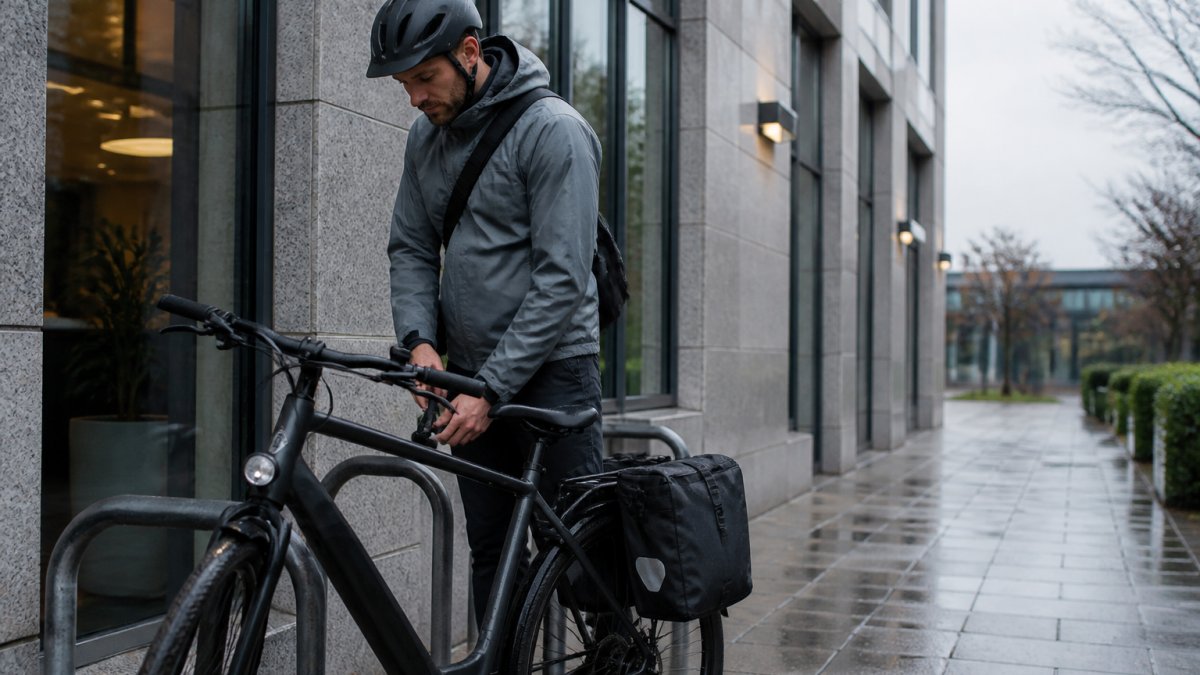
Technical trousers or shorts with some stretch beat jeans, which stay wet and restrict movement. For wet-weather detail, our guide on how to commute by e-bike in rain covers riding technique and kit choices in depth.
Mudguards, Racks and Carrying Your Gear
Mudguards and a rack turn a fair-weather bike into a genuine commuter. Full-length mudguards keep spray off your back, trousers and drivetrain, meaning fewer chain cleans and a drier arrival. A rack takes the weight off your shoulders and lets you carry panniers instead of a rucksack.
Backpacks work for short rides but leave a sweaty back; panniers and a rack are better beyond a few miles.
The Bike Repair Kit for Commuting Every Rider Needs
A bike repair kit for commuting should fix a puncture and get you home, nothing more: a spare inner tube matched to your tyre size, two tyre levers, a mini pump, a patch kit and a multitool.
Punctures are the most common breakdown, so practise changing a tube at home once; the roadside in the rain is not the time to learn.
Match the Kit to Your Commute, Not the Catalogue
The right kit depends on how far you ride and what you can carry. Use these three tiers as a starting point and add only what your own route proves you need.
| Commute length | Carry this | Leave this at home |
|---|---|---|
| Under 3 miles | Spare tube, two tyre levers, mini pump, multitool | Patch kit, CO2, spare chain link |
| 3-8 miles | The above plus patch kit and a pair of nitrile gloves | Full tool roll, spare cables |
| 8+ miles or remote route | The above plus CO2 inflator, spare chain link, zip ties, a small first-aid pouch | Anything you have not used in a year |
Weigh your saddle bag once: if it is over about 1kg, you are probably carrying duplicates or tools for a bike you no longer ride.
What Stays on the Bike Versus in Your Bag
Keep heavy, rarely used items on the bike and valuables on your person. A pump, multitool, spare tube and patch kit can live in a saddle bag permanently. Your phone, wallet, keys and a light layer belong in a bag you carry.
Bicycle Helmets Adults Oxford F15 →
A practical split that works for most riders:
- Permanently on the bike: saddle bag with tube, levers, multitool and patch kit; pump on a frame mount; a spare tube taped under the saddle on longer commutes.
- Carried every day: phone, wallet, keys, a light waterproof layer, and any medication.
- Stored at work: a full change of clothes, toiletries, a towel and a charging cable, so you are not hauling them twice a day.
The Failures That Actually Strand Commuters
Punctures get the attention, but the breakdowns that strand people are simpler: a chain that drops and jams, a brake pad that rubs after a wheel change, a loose quick-release, or a light that dies on an unlit path.
If you ride an e-bike, plan for a dead battery: know your realistic range, charge at work if you can, and keep a charged light independent of the main battery.
Locks and Theft Prevention: Protecting Your Commuter Bike
A lock is only as good as the thing you lock the bike to. Choose a solid Sheffield stand or fixed railing, thread the lock through the frame and rear wheel, and take the front wheel if it is quick-release. D-locks resist cutting far better than cables, which should only ever be secondary.
The Giant D Lock has a 150mm lock width and 95mm ring width, comes with two keys and costs £9.99, which makes it an easy upgrade from a cable. Lock up in well-lit, busy places, vary your parking spot, and register your frame number. For a commuter bike, the lock is not an accessory; it is insurance.

Building Your Commuter Kit by Budget and Commute Length
Build your kit in tiers matched to how far you ride and what you can spend. A two-mile rider and a fifteen-mile rider need different things, and buying the whole list at once wastes money:
| Tier | What it covers | Typical spend | Best for |
|---|---|---|---|
| Starter | Helmet, light set, D-lock, spare tube | Around £60 | Rides under 3 miles |
| Core | Starter kit plus mudguards, rack, pump, multitool | Around £120 | 3-8 miles, all weather |
| Full | Core kit plus panniers, waterproofs, mirror, bell | Around £200 | 8+ miles, daily use |
A bell costs £2.99 and a mirror £12.99, and both earn their place in traffic. Cost per use is the honest measure: a £27.99 light set used twice a day for a year costs pennies per journey. E-bike commuters should add a spare battery plan and check brake pads more often, since extra weight and speed wear them faster.
Buy in This Order, Not All at Once
Starting from nothing, spend in the order that removes the most risk per pound:
- Helmet and lights first. These are the items that protect you and make you visible, and they are the ones you will regret skipping. A £19.99 helmet and a £27.99 light set cover the legal and practical minimum.
- A proper lock second. A £9.99 D-lock is cheap insurance against losing the whole bike, and it resists cutting far better than a cable.
- Puncture kit third. A spare tube, levers and a pump cost less than a single taxi home and turn a stranded commute into a ten-minute fix.
- Weather and carrying kit last. Mudguards, a rack and panniers improve comfort and reduce daily hassle, but they are upgrades rather than safety essentials.
A worked example: commute five days a week, 46 weeks a year, and that is 460 one-way trips. A £27.99 light set spread across 460 trips is about 6p per trip; a £9.99 D-lock is about 2p. The starter tier offers excellent value.
Short, Long, Wet and Winter Versions
The same rider needs different kit on different days. Keep a base kit on the bike and add layers for the conditions:
- Short commute (under 3 miles): helmet, lights, lock, spare tube and a small pump. Skip the rack and panniers; a small backpack is fine.
- Long commute (8+ miles): add panniers and a rack to take weight off your back, a second water bottle, and a phone mount for navigation.
- Wet weather: full-length mudguards, a waterproof shell with taped seams, overshoes or waterproof trousers, and a dry bag for your work clothes.
The Door-to-Desk Routine Competitors Skip
The kit list is only half the job; the other half is what happens when you arrive. A little planning removes daily friction and stops you carrying duplicates.
- Keep a work kit at work: a full change of clothes, shoes, toiletries, a towel and a charging cable, so you are not hauling them twice a day.
- Plan for wet gear: a small dry bag for wet clothing, and somewhere to hang it. A folding bag that clips to the pannier rack keeps the wet separate from the dry.
- Secure parking: ask whether your workplace has a locked bike store, Sheffield stands in a well-lit area, or a shower and changing room. If not, a second lock kept at work saves carrying two every day.
E-Bike Commuters: A Different Budget
E-bike commuters should budget for the battery, not just accessories: a second charger at work, a secure place to store and charge the battery, and a range check before relying on a single charge for a round trip. Brake pads wear faster on an e-bike, so set aside more for consumables. The core accessories, helmet, lights, lock, repair kit, are the same, but running costs are not.
Book a Free E-Bike Test Ride Before You Commit
The best way to settle your commuting kit is to ride the bike first. Reading about the benefits of an e-bike test ride is useful, but nothing replaces ten minutes in the saddle.
We keep a showroom in Leicester with free test rides, expert advice and UK after-care that includes servicing, battery testing and safety inspections. You can also see a specific adult helmet option before you buy.

Frequently Asked Questions
What do I need for commuting by bike?
At minimum you need a roadworthy bike with working brakes and correctly inflated tyres, a front and rear light, a helmet, a lock and a basic repair kit with a spare inner tube and pump. Add mudguards and a rack or panniers for wet days and carrying work gear. A bike commuting checklist kept by the door stops you forgetting the small items, and if you ride an e-bike, charge the battery the night before so range is never a worry.
What safety gear do I need for cycling to work?
Bike commuting safety equipment starts with lights: a front light to see and be seen, and a rear light with a flashing mode for daylight. Reflectors on pedals and wheels help in low light, and a bell gives a clear warning on shared paths. A well-fitting helmet is the other core item, sized properly to your head. High-visibility or bright clothing adds another layer, though lights and reflectors do more for visibility than colour alone.
What tools should I carry on a bike commute?
A practical bike repair kit for commuting covers punctures and loose bolts: a spare inner tube, tyre levers, a mini pump or CO2 cartridge, a patch kit and a multitool. Add a small amount of chain lube for longer routes. Keep the kit in a saddle bag so it lives on the bike and you never leave it at home. Practise changing a tube at home once so the roadside version takes minutes rather than half an hour.
How do I keep my work clothes dry when cycling?
Carry work clothes in a roll-top bag or pannier rather than wearing them, and wear a waterproof commuter jacket and technical trousers over your normal layers. Mudguards keep spray off your shoes and back. Keep a spare pair of socks and a towel at work so a wet ride does not derail your day. On shorter routes, a change of top and a quick freshen-up in the office washroom is often all you need.
What should I keep at work for cycling to work?
Leave the bulky or easily forgotten items at work: shoes, a towel, deodorant, a spare shirt and a plastic bag for wet kit. A small personal-care kit with wipes and a comb covers the arrival freshen-up. Keeping these at your desk means your daily bag only carries what changes day to day, which makes the commute lighter and the packing quicker.
The challenge with any bike commute is not buying kit; it is buying the right kit and having a bike that suits your route. That is where we come in. Green Hybrid Bikes offers free test rides at our Leicester showroom, a range of commuter and folding e-bikes with 50+ miles of battery range on selected models, and UK after-care covering servicing, battery testing and safety inspections. Get started with Green Hybrid Bikes and build a commute that works every day of the week.

